Remove loose surface hair
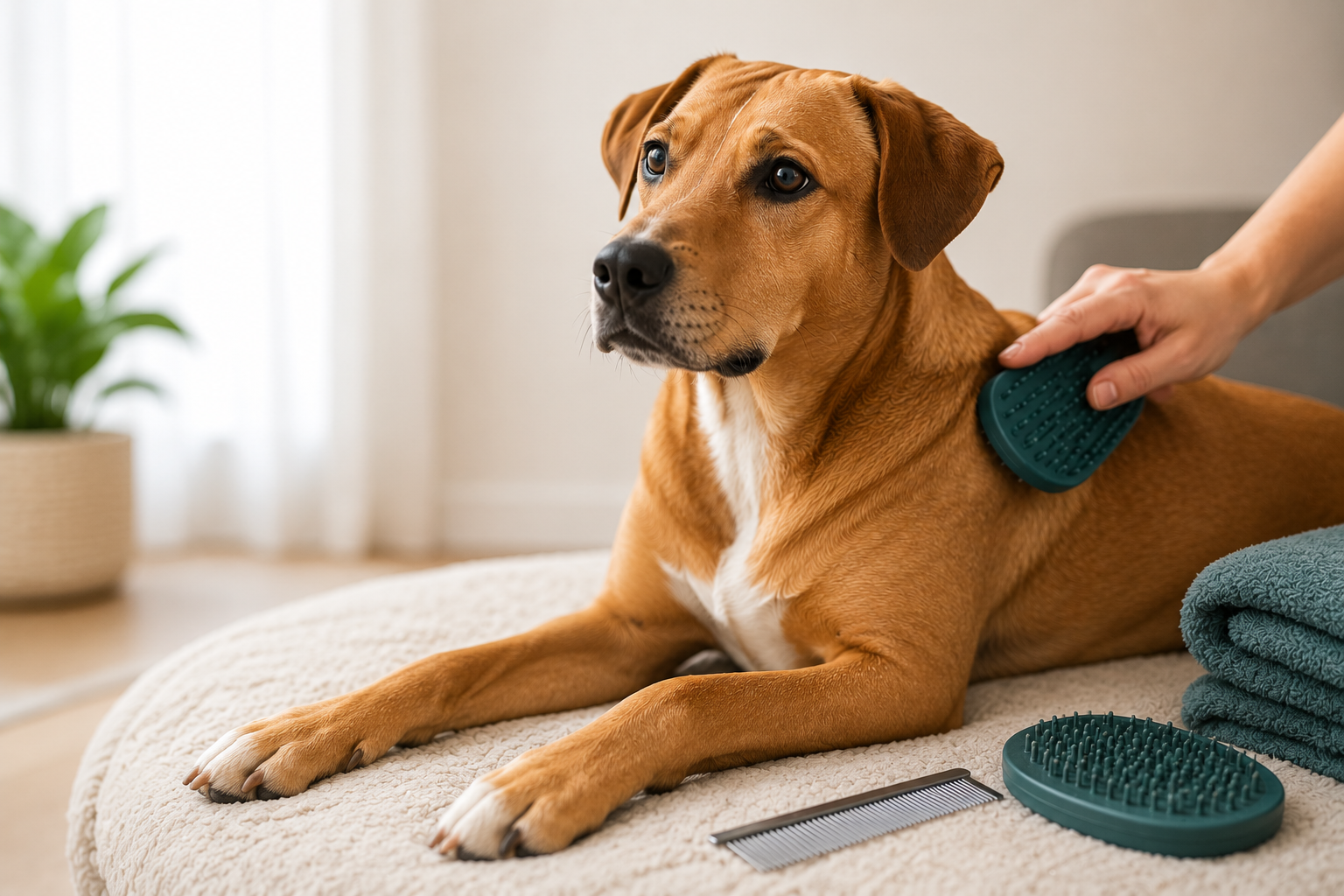
Rubber curry brushes, grooming mitts and soft bristle brushes can help collect shedding hair without relying on sharp pins.

Short coats may look low-maintenance, but regular brushing, bathing, skin checks and shedding control still matter. Build a routine that keeps your dog’s coat clean, comfortable and easier to monitor.
Loose hair, dirt, dry skin, irritation and small bumps can still develop beneath a smooth-looking coat. Routine hands-on checks help you notice changes earlier.
Short-haired dogs often need less detangling than long-haired dogs, but their coat still collects loose hair, outdoor debris, skin oils and dander.
Regular grooming also gives you a chance to feel for tenderness, swelling, parasites, flaky skin, small wounds or changes that may not be visible from a distance.
Rubber curry brushes, grooming mitts and soft bristle brushes can help collect shedding hair without relying on sharp pins.
Bathing can remove grime and odor, but overbathing may dry or irritate the skin.
Short hair makes it easier to inspect for redness, flakes, scratches, parasites, bumps and areas of thinning hair.
Some short coats release much more hair during seasonal changes and need temporarily increased brushing.
Keep the routine gentle and consistent. Frequency should reflect your dog’s shedding, activity level, skin condition and tolerance for grooming.
Run your hands over the body and look for redness, dry patches, scratches, parasites, tenderness, hair loss or unusual bumps.
Use a tool suited to a short coat and brush in the direction of hair growth with light, controlled pressure.
Bathe when the coat is dirty, oily or noticeably odorous using a dog-appropriate shampoo and thorough rinsing.
Towel dry gently, keep your dog warm and inspect the coat again for irritation or areas that need veterinary attention.
Most short coats do not need long pins designed for deep, tangle-prone hair. A flexible grooming tool can loosen dead hair, lift debris and stimulate the skin without unnecessary scraping.
Brush in short sessions and watch your dog’s body language. Flinching, moving away, turning toward the brush or skin redness can mean the pressure is too firm.
Flexible rubber tips can loosen dead hair and provide a gentle massage for many smooth-coated dogs.
A mitt can be useful for quick maintenance and dogs that are uncomfortable with a traditional brush handle.
Soft bristles can remove loose surface hair and help spread natural coat oils across the hair.
Aggressive or repeated use can irritate the skin or remove more coat than intended. Use the lightest effective pressure.
Bathing frequency varies. A dog that swims, rolls in dirt or has a veterinarian-directed skin-care plan may need a different schedule from a mostly indoor dog.
Water that is too hot may increase discomfort and dryness. Wet the coat gradually and keep water away from the eyes and inside the ears.
Avoid substituting strongly scented household products or human shampoo unless a veterinarian specifically directs their use.
Shampoo residue can irritate the skin. Rinse carefully and dry the coat without rough rubbing or excessive heat.
Hair length does not determine how much a dog sheds. Some short double coats release substantial undercoat, while other smooth coats shed smaller amounts throughout the year.
Temporarily increase grooming when loose hair appears more heavily on bedding, furniture or clothing.
Several gentle sessions are usually better than one aggressive session that repeatedly scrapes the same skin.
Remove trapped hair and follow the manufacturer’s cleaning guidance so the tool remains effective.
Bald spots, sudden thinning, broken skin or persistent itching warrant veterinary attention.
Stop routine grooming and seek professional guidance when the skin looks painful, inflamed, infected or significantly different from normal.
Repeated scratching, licking or rubbing may signal irritation, parasites, allergy or another skin problem.
A strong odor, wet skin or discharge can indicate a condition that needs veterinary evaluation.
New lumps, swelling, tenderness or rapidly changing areas should not be ignored.
Bald patches, bleeding, crusting or wounds require more than routine brushing and bathing.
A professional appointment can help with bathing, drying, nail care, ear-area maintenance, shedding control and hands-on coat assessment.
Professional bathing and controlled coat removal may help when home brushing is not keeping up with loose hair.
A qualified professional may be better equipped to manage dogs that resist certain parts of grooming.
Groomers can point out visible concerns, but diagnosis and medical treatment belong with a veterinarian.
Use these tools and guides to match grooming equipment, plan maintenance and recognize situations that need professional help.
Get a grooming-tool suggestion based on coat type, length, shedding and skin sensitivity.
Use the finder →Organize brushing, bathing, drying and professional grooming into a repeatable schedule.
View grooming routines →Compare brushes, combs and other grooming-tool categories for different coat needs.
Review grooming tools →Understand how mats form and when professional grooming or veterinary care may be safer.
Review matting help →Many short-haired dogs benefit from brushing once or twice a week, but heavy shedders may need more frequent sessions. Adjust the schedule based on loose hair, skin sensitivity and seasonal coat changes.
Rubber curry brushes, grooming mitts and soft bristle brushes are common starting points. The best choice depends on coat density, shedding level and skin sensitivity.
Not every short-haired dog needs frequent professional appointments, but professional bathing, drying, nail care and shedding control can still be helpful.
Bathing frequency depends on activity, dirt, odor, skin condition and veterinary guidance. Avoid bathing simply by calendar when the coat and skin do not need it.
Seasonal coat changes, breed, indoor climate and normal coat turnover can increase shedding. Sudden hair loss, bald areas, redness or persistent itching should be discussed with a veterinarian.
Most smooth short coats are less prone to traditional matting, but compacted hair can still develop in dense coats or friction areas. Dirt, moisture, skin folds and undercoat can also create maintenance problems.
Match your dog with an appropriate brush and create a realistic schedule for coat checks, bathing and shedding control.
Answer five quick questions and get a coat-based brush, comb and maintenance recommendation.
Use the Brush & Comb Finder