1
Protective outer coat
Longer guard hairs help protect the skin from weather, dirt, moisture, sunlight, and environmental exposure. These hairs usually shed differently from the softer coat underneath.

Understand the two layers of a double coat, how to remove loose undercoat safely, when shedding increases, which tools may help, and why routine shaving is usually not the answer.
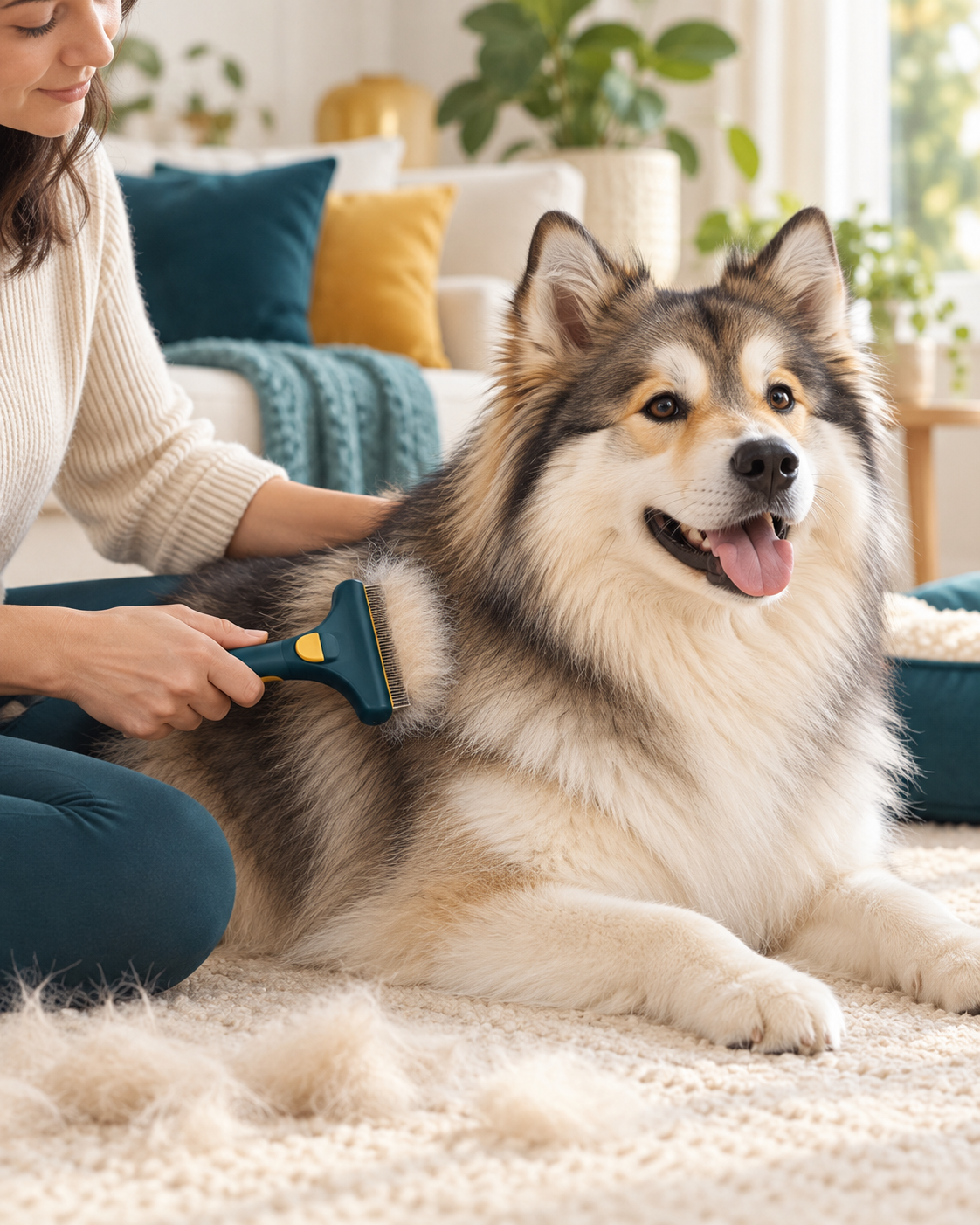
The protective outer coat and softer undercoat grow, shed, and respond to grooming differently.
Double-coated dogs have a longer protective topcoat over a softer, denser undercoat. The undercoat often releases much more hair, particularly during seasonal shedding, while the outer coat helps protect the skin and should not simply be treated as excess hair.
Many double-coated dogs benefit from at least weekly brushing, with more frequent sessions during heavy shedding. Remove loose undercoat gently, dry the coat thoroughly after bathing, and avoid routine shaving simply to control shedding.
Understanding what each layer does makes the rest of the grooming routine easier to understand.
Longer guard hairs help protect the skin from weather, dirt, moisture, sunlight, and environmental exposure. These hairs usually shed differently from the softer coat underneath.
The undercoat helps insulate the dog and often produces the dramatic loose hair owners notice during seasonal coat changes. This is the layer most likely to become packed when grooming falls behind.
The American Kennel Club describes double coats as a longer, protective outer layer over a softer insulating undercoat. Read the AKC double-coat guide →
Not every double-coated dog needs the same routine. Coat length, density, climate, shedding, and grooming history all matter.
The goal is not to remove as much coat as possible. The goal is to release dead undercoat while keeping the skin comfortable and the protective outer coat intact.
Work slowly, particularly when the coat is thick. A dense coat can hide irritated skin, mats, burrs, scabs, or sore areas underneath.
The correct tool depends on coat depth, length, shedding level, skin sensitivity, and whether the coat is loose or packed.
Helps reach loose undercoat beneath the outer layer. Choose a size and tooth length that fit the coat rather than using the most aggressive tool available.
Useful for separating longer areas, removing surface hair, and maintaining sections where loose coat begins to collect.
Helps check feathering, tail hair, behind the ears, legs, and other longer areas where hidden tangles can remain.
Can be useful for longer outer coats and feathering when a gentler finishing tool is appropriate.
May work well for shorter double coats and dogs that dislike traditional brushes.
Used correctly, professional drying equipment can help separate a dense coat and release loose undercoat after bathing.
Many double-coated dogs benefit from at least weekly brushing. Longer coats, heavier undercoats, and active shedding periods can require more frequent attention.
Dense undercoat can hold shampoo and moisture close to the skin, so rinsing and drying need extra attention.
VCA notes that matted fur can retain water and prevent normal airflow to the skin, creating conditions where painful hot spots can develop. Read the VCA guidance →
Routine shaving is generally not recommended simply to reduce shedding or make grooming easier.
The topcoat and undercoat grow differently and perform different jobs. Cutting both layers very short does not stop the shedding cycle and may affect how the coat grows back.
Severe matting, surgery, or another medical situation can create exceptions. Those situations should be handled with a veterinarian or experienced professional groomer.
AKC: How to Groom a Double-Coated Dog →It only makes the shed hairs shorter. If your main problem is loose undercoat, regular brushing, bathing, thorough drying, and professional deshedding usually address the real grooming issue without removing the protective outer coat.
Double coats can become difficult to manage when loose undercoat becomes packed, the dog is very large, drying takes too long, or home grooming becomes stressful.
Prepare Groomer QuestionsContinue with these guides and tools based on your dog’s coat condition and grooming needs.
Understand normal shedding, seasonal coat changes, and signs that may be more than ordinary shedding.
Read the guide →Review practical brushing schedules based on coat type, shedding, and matting risk.
Read the guide →Learn how friction, moisture, trapped hair, and missed areas cause repeated mats.
Read the guide →Get a practical tool recommendation based on coat type, shedding, tangles, and sensitivity.
Use the finder →Quick answers to common questions about undercoat care, shedding, tools, and shaving.
Do not force an undercoat rake, slicker brush, or comb through skin-tight mats. Contact a professional groomer when the coat is heavily packed or painful, and contact a veterinarian for wounds, swelling, discharge, strong odor, bleeding, or abnormal skin.