Loose hair stays trapped
Shed hair can remain caught inside curls instead of falling away, creating the beginning of a knot.

Keep a curly dog coat comfortable, manageable, and easier to maintain with a practical routine for brushing, combing, bathing, drying, mat prevention, and professional grooming.
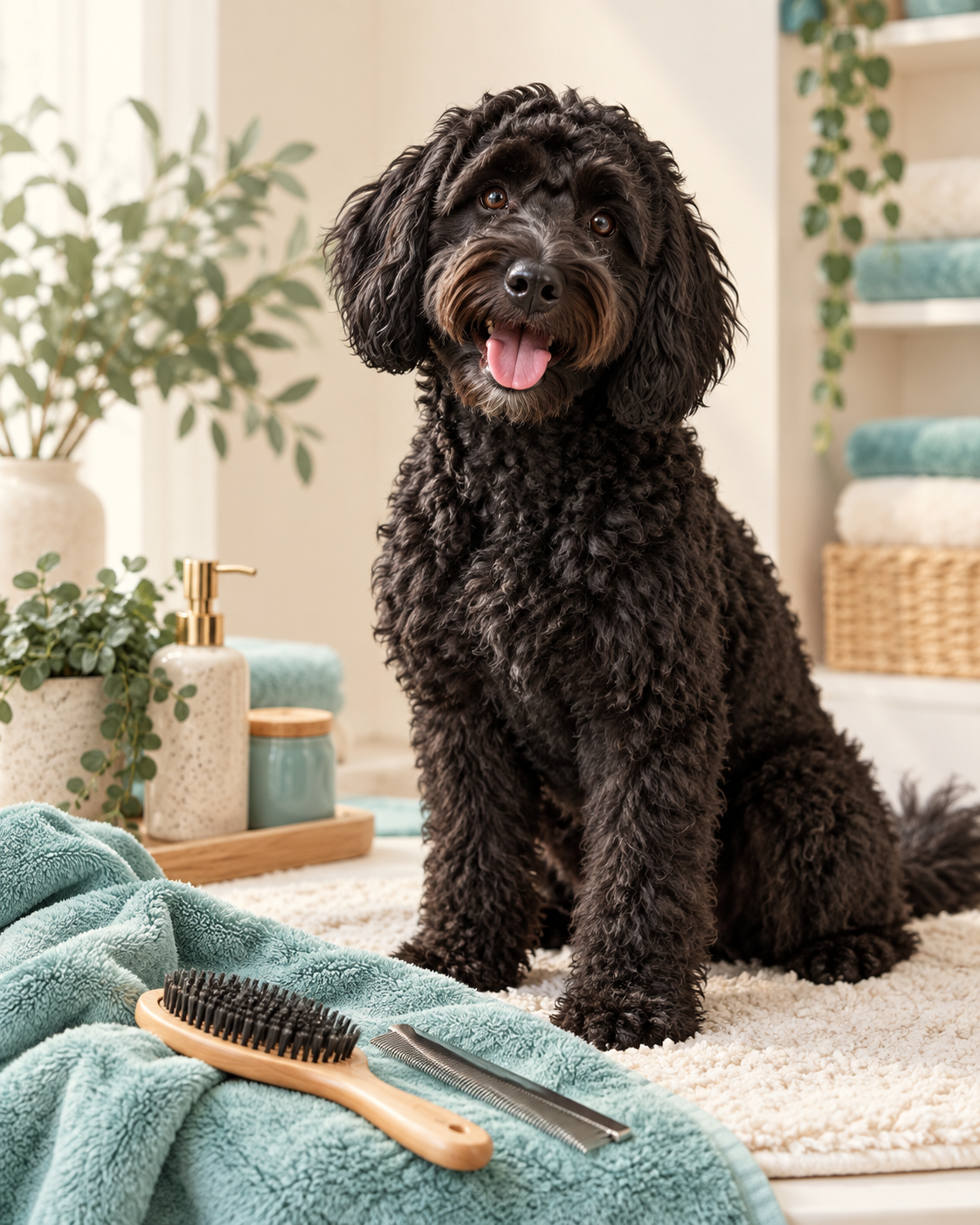
Brushing the surface is not always enough. A gentle comb check helps reveal knots closer to the skin.
Curly and tightly wavy coats can trap loose hair instead of letting it fall away easily. That loose hair can twist into neighboring curls and form tangles that are difficult to see from the surface.
The goal is not to brush constantly. It is to keep the coat open, dry, and manageable enough that small tangles are caught before they become painful mats.
A curly coat may look fluffy after brushing even when tangles remain beneath the surface. A gentle comb check can help confirm whether the hair is actually clear.
Curl pattern, trapped loose hair, friction, and moisture can all make these coats more prone to tangles.
Shed hair can remain caught inside curls instead of falling away, creating the beginning of a knot.
Repeated movement can cause neighboring strands to twist together, especially in longer coats.
Bathing, swimming, rain, and dampness can make existing tangles harder to separate.
The outer coat may look brushed while hidden knots remain closer to the skin.
Collars, harnesses, leg movement, sleeping, and rubbing can quickly create tangles.
More coat length usually means more opportunities for tangles to form and tighten.
The best routine is one you can maintain consistently without turning every grooming session into a struggle.
Keep sessions manageable, pay extra attention to friction areas, and adjust coat length if maintenance becomes unrealistic.
Read the Curly Grooming GuideThese areas deserve extra attention because movement and friction can tighten curls quickly.
Moisture management is one of the most important parts of curly-coat care.
Water can tighten existing knots. Feel through the coat before getting it completely wet.
Dense curls can hold shampoo or conditioner near the skin if rinsing is rushed.
Damp curls can tighten, clump, and hide skin irritation or odor.
Mat prevention becomes much easier when brushing, coat length, bathing, drying, and professional grooming all work together.
If the coat repeatedly becomes tightly matted between grooming sessions, the current length or maintenance schedule may not be realistic.
Read the Dog Matting GuideThere is no single correct length for every curly-coated dog.
Shorter curls generally reduce brushing time and may be easier to dry and monitor for skin problems.
A moderate length may offer a fluffy look while remaining realistic for regular brushing and comb checks.
Longer curls can require more brushing, closer comb checks, and shorter intervals between grooming appointments.
Dense curly coats can make it difficult to notice redness, flakes, moisture, odor, hair thinning, parasites, or irritated areas near the skin.
Part the coat occasionally and look beneath the curls instead of judging coat health only by how fluffy the outside appears.
Bleeding, swelling, discharge, strong odor, open wounds, marked pain, severe itching, or abnormal skin should not be treated as an ordinary coat-maintenance issue. Contact a veterinarian when the skin itself appears injured or unhealthy.
Continue with the guide or tool that matches what your dog needs next.
Go deeper into brushing technique, grooming routines, and coat maintenance.
Read the grooming guide →Understand why mats form, how to prevent them, and when to get help.
Read the matting guide →Match grooming tools to coat texture, length, tangles, and sensitivity.
Use the finder →Know when a professional groomer may be the easier and safer choice.
Review professional grooming →Quick answers for maintaining curls without letting tangles get ahead of you.
A shorter, comfortable curly coat is better than a longer coat that repeatedly becomes tight, painful, or difficult to maintain. Stop home grooming when the dog is hurting or you cannot safely assess the skin beneath a mat.