01
Tangled hair can tighten
Wet strands can clump together and make an existing knot more compact.

Water can make some tangles tighter and harder to manage, especially when a dog already has dense or skin-tight matting. Before putting a matted dog in the bath, check how severe the mats are and whether the coat can be safely handled at home.
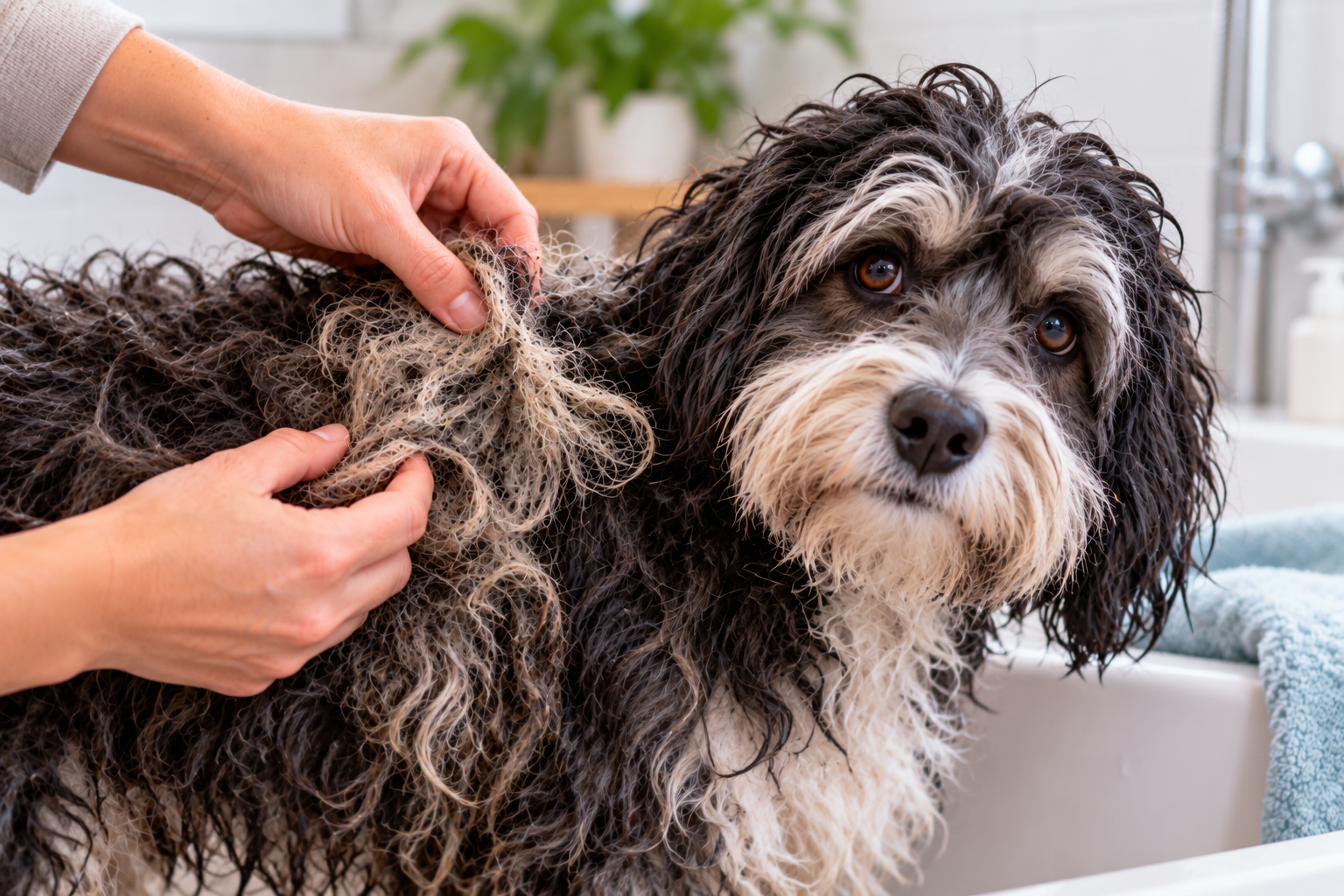
Dense tangles may tighten further when wet and become harder to dry completely.
A dog does not need to be perfectly tangle-free before every bath, but established matting changes the situation. Water can cause tangled hair to swell, compress, and cling together more tightly.
Shampooing also requires rubbing and rinsing through the coat. If mats already pull against the skin, that extra movement may make grooming more uncomfortable.
The biggest concern is dense or skin-tight matting. Those mats may hold moisture close to the skin and can be difficult to dry thoroughly.
Wet strands can clump together and make an existing knot more compact.
Dense tangled coat can stay damp longer than freely separated hair.
Air may not move easily through a compacted mat, especially close to the skin.
Scrubbing shampoo through already tangled coat can twist neighboring hair together.
Dense matting may prevent you from noticing irritation until after coat removal.
A knot that was manageable while dry may become firmer after soaking and drying.
Run your hands through the coat before turning on the water. Pay special attention behind the ears, beneath the collar, in the armpits, along the belly, around the legs, and near the tail.
What matters most is whether the tangles move freely or are tightly attached to the skin.
Do not immediately start pulling harder just because a bath is planned. Assess the coat and deal only with tangles that can be handled comfortably.
If the mats are dense or close to the skin, professional removal may be a better first step than bathing.
Find hidden mats before the hair is wet and harder to assess.
Work only on small knots that move freely and do not cause discomfort.
Do not turn pre-bath brushing into a long painful dematting session.
Look for redness, dampness, sores, discharge, swelling, or tenderness.
If the coat is tightly matted, arrange safer removal before a routine bath.
If the coat has only a few loose tangles and the dog is comfortable, those tangles may sometimes be addressed first so normal bathing and drying can continue.
When a comb can pass through the area without pulling and there are no dense hidden mats, a normal bath may be reasonable.
There is no obvious redness, open skin, swelling, discharge, or strong tenderness in the areas you can inspect.
Bathing works best when you can separate and dry the coat completely, including friction areas and dense undercoat.
Blotting and controlled drying are preferable to vigorously rubbing long or tangle-prone coat back and forth.
Clean coat is important, but heavily matted hair may need to be safely removed before a normal bath can be useful.
Dense mats can hold moisture close to the body and may become even more difficult to separate after washing.
If the coat is skin-tight, painful, widespread, or hiding irritated skin, let a professional groomer assess the safest order of grooming steps.
A groomer can assess whether mats should be clipped or otherwise removed before the dog is bathed. This is often more comfortable than soaking dense mats and then trying to detangle them.
Veterinary attention may be appropriate when the skin beneath the coat appears injured, bleeding, swollen, very painful, infected-looking, or has discharge or a strong unusual odor.
Visit Dog Matting Help →Remove loose hair and minor tangles before adding water whenever practical.
Feel behind the ears, under the collar, in the armpits, belly, legs, and tail.
Work shampoo through the coat without aggressively rubbing hair back and forth.
Product residue trapped in dense coat can make grooming more difficult.
Pay attention to dense or hidden areas where dampness can linger.
A gentle post-dry check can catch small tangles before they tighten.
Get the broader picture on matting severity, prevention, and safer coat care.
Read the guide →Learn when a tangle may be manageable and when mat removal should be left to a professional.
Read the removal guide →Learn how tight matting may pull on the skin and interfere with comfortable movement.
Read about matting pain →Return to the main hub for prevention, body-area guides, severe matting help, and tools.
Visit Matting Help →Dense or skin-tight mats are usually better assessed before bathing. Water can make tangled coat more compact and harder to dry.
Wetting tangled coat can cause strands to clump and compress together, which may make some existing mats tighter.
If the tangles are small, loose, painless, and can be gently removed first, a normal bath may be reasonable.
Severe or skin-tight matting may need professional coat removal before bathing. The safest approach depends on the coat, mat severity, body area, and condition of the skin.
Shampoo should not be relied on to loosen dense or skin-tight matting. Severe mats may require professional removal instead of repeated washing and detangling.
Stop aggressive grooming. Veterinary evaluation may be appropriate for open wounds, bleeding, swelling, discharge, severe pain, or other concerning skin changes.
A bath can wait when matting is tight, painful, or difficult to dry safely. Deal with the coat condition first, then return to bathing once the dog can be washed and dried without trapping moisture or adding unnecessary pulling.