01
Trying to leave
Repeatedly stepping away, backing up, climbing off the grooming area, or hiding.

A nervous dog may tolerate only a small amount of grooming before fear begins to build. When mats are involved, the goal is not to finish as quickly as possible. It is to protect comfort, avoid forcing painful coat work, and recognize when professional help is the better choice.
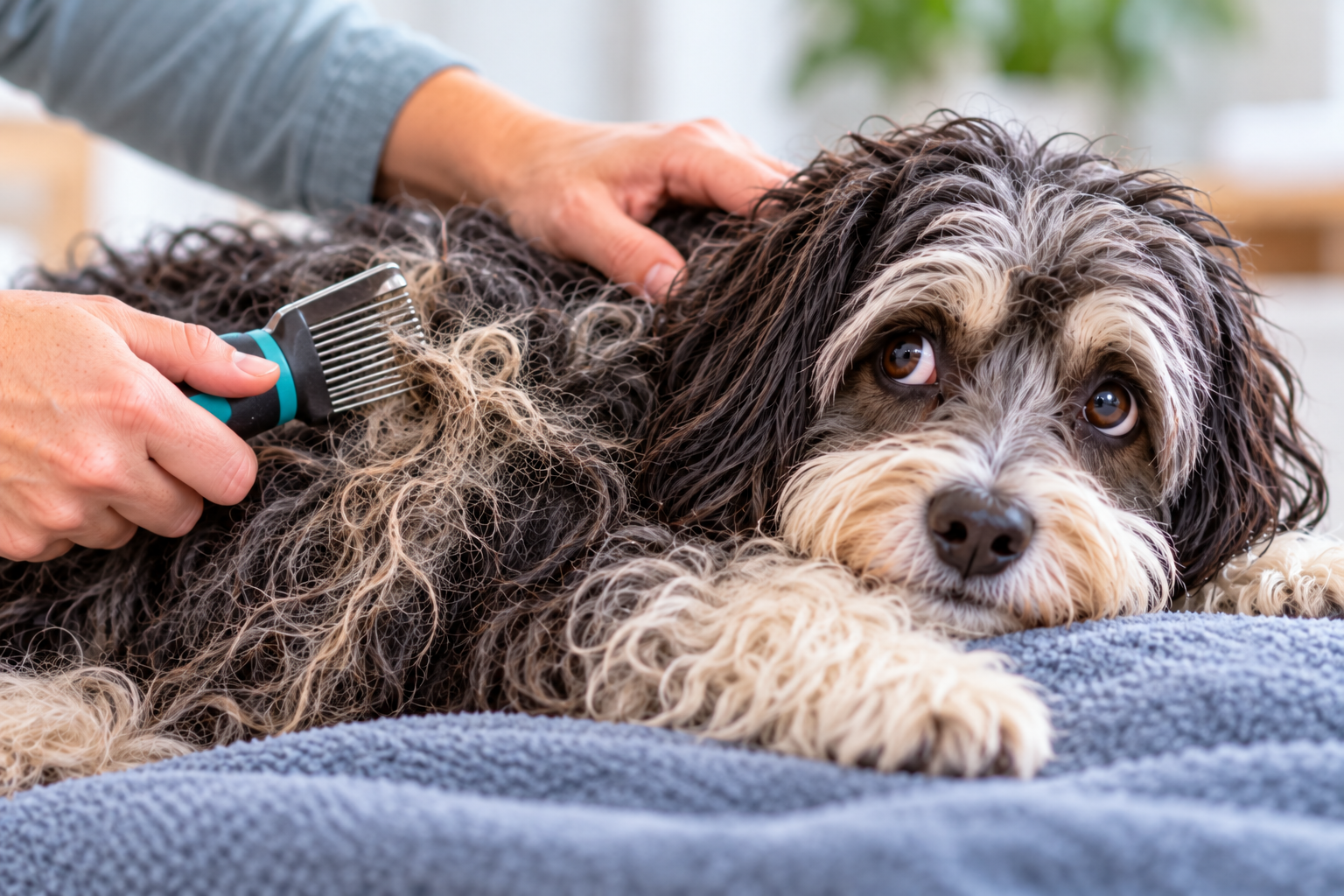
A mat does not have to be solved in one session if the dog is becoming overwhelmed.
Dematting can involve pulling, unfamiliar tools, close handling, unusual body positions, and sensitive areas. For a dog that already worries about grooming, those things can make a difficult coat problem feel even bigger.
Trying to hold the dog more firmly or continue until the mat is finished can turn discomfort into panic.
A better approach is to assess both the mat and the dog. Sometimes a small loose tangle can be handled in a brief calm session. Sometimes a tight mat needs professional removal instead.
Repeatedly stepping away, backing up, climbing off the grooming area, or hiding.
Becoming very still does not always mean the dog is relaxed or comfortable.
Panting that appears during handling may accompany increasing stress.
Looking sharply at the brush, hand, or sensitive area can be an early warning to stop.
These signals should not be punished or ignored. End the attempt and reassess.
Escalating movement can make close grooming with tools unsafe for both dog and handler.
Choose a quiet place with secure footing and enough light to see the coat. Avoid surrounding the dog with several people or introducing multiple tools at once.
Keep the first goal small. You may only need to inspect the mat and determine whether home care is appropriate.
Only attempt home dematting when the knot is small, loose, clearly separated from the skin, and the dog can tolerate gentle handling.
Dense or painful mats are not good candidates for a long training session. The dog should not have to endure repeated pulling while learning to accept grooming.
Touch and separate nearby coat without immediately pulling on the knot.
Hold above a loose tangle when possible to reduce direct skin pulling.
Use tiny movements instead of trying to pull through the entire mat.
Stop handling the area for a moment before stress starts building rapidly.
A short successful session is better than pushing until the dog panics or struggles.
Some dogs struggle loudly. Others become quiet and still. Watch the whole dog rather than relying on one behavior.
Repeated avoidance may mean the dog is asking for more distance from the grooming process.
Freezing can occur when a dog feels unsure or overwhelmed, so stillness should not automatically be read as cooperation.
A dog that progresses from mild avoidance to twisting, growling, or snapping needs the session stopped.
If each touch produces a stronger response, the mat itself may be painful or the dog may be reaching its handling limit.
Stronger restraint can increase fear, struggling, and the risk of an accidental injury when grooming tools are close to the body.
Never punish growling or other warning signals. Those behaviors are useful information that the dog is uncomfortable or frightened.
If a nervous dog has dense, painful, or skin-tight mats, professional help may be safer than continuing home dematting.
Professional groomers may have better handling setups, more efficient coat-removal techniques, and experience recognizing when a nervous dog needs a different approach.
If fear is severe, the matting is painful, or safe grooming cannot be completed, ask a veterinarian for guidance. Veterinary care may also be appropriate when there are open wounds, swelling, bleeding, discharge, or significant skin irritation.
Visit Dog Matting Help →Frequent brief coat checks can be easier than waiting for a long grooming session.
Check behind ears, under collars, armpits, belly, legs, and tail before knots tighten.
Similar locations, tools, and handling patterns can help grooming feel less surprising.
Loose knots are generally easier and quicker to handle than established mats.
A shorter practical trim may reduce the amount of stressful coat work needed.
Do not wait until the coat is severely matted before asking for help.
Get the broader picture on mat severity, prevention, safer coat care, and professional help.
Read the guide →Learn how tight mats can pull the skin and make grooming uncomfortable.
Read about matting pain →Build a routine that catches tangles before they become a difficult grooming session.
Prevention guide →Return to the main hub for body-area guides, severe matting help, prevention, and tools.
Visit Matting Help →Keep sessions short, use gentle handling, work only on loose tangles, pause frequently, and stop when stress begins increasing. Dense or painful matting may need professional removal.
Safe positioning may be necessary, but increasing force to overpower a frightened dog can increase stress and make close grooming less safe.
Stop the grooming attempt. Growling can indicate fear, pain, or discomfort and should not be punished or ignored.
A small loose tangle may sometimes be handled gradually if the dog remains comfortable. A tight painful mat should not be repeatedly pulled at across multiple sessions simply to preserve the coat.
Professional help is a good choice when the dog cannot tolerate safe handling, mats are dense or painful, or grooming tools cannot be used safely.
Yes. A veterinarian can help evaluate severe fear, pain, or health concerns that interfere with safe grooming and discuss appropriate next steps.
Nervous dogs often do better when coat care is broken into manageable steps. If fear, pain, or unsafe movement takes over the session, stopping is the right decision. The mat can be addressed with a safer plan.