01
Shorter standing tolerance
Long grooming sessions may become tiring even when the dog remains cooperative.

An older dog may tire more quickly, move less comfortably, or tolerate grooming differently than before. When mats develop, the safest approach is usually slower, shorter, and more focused on comfort than preserving every bit of coat.
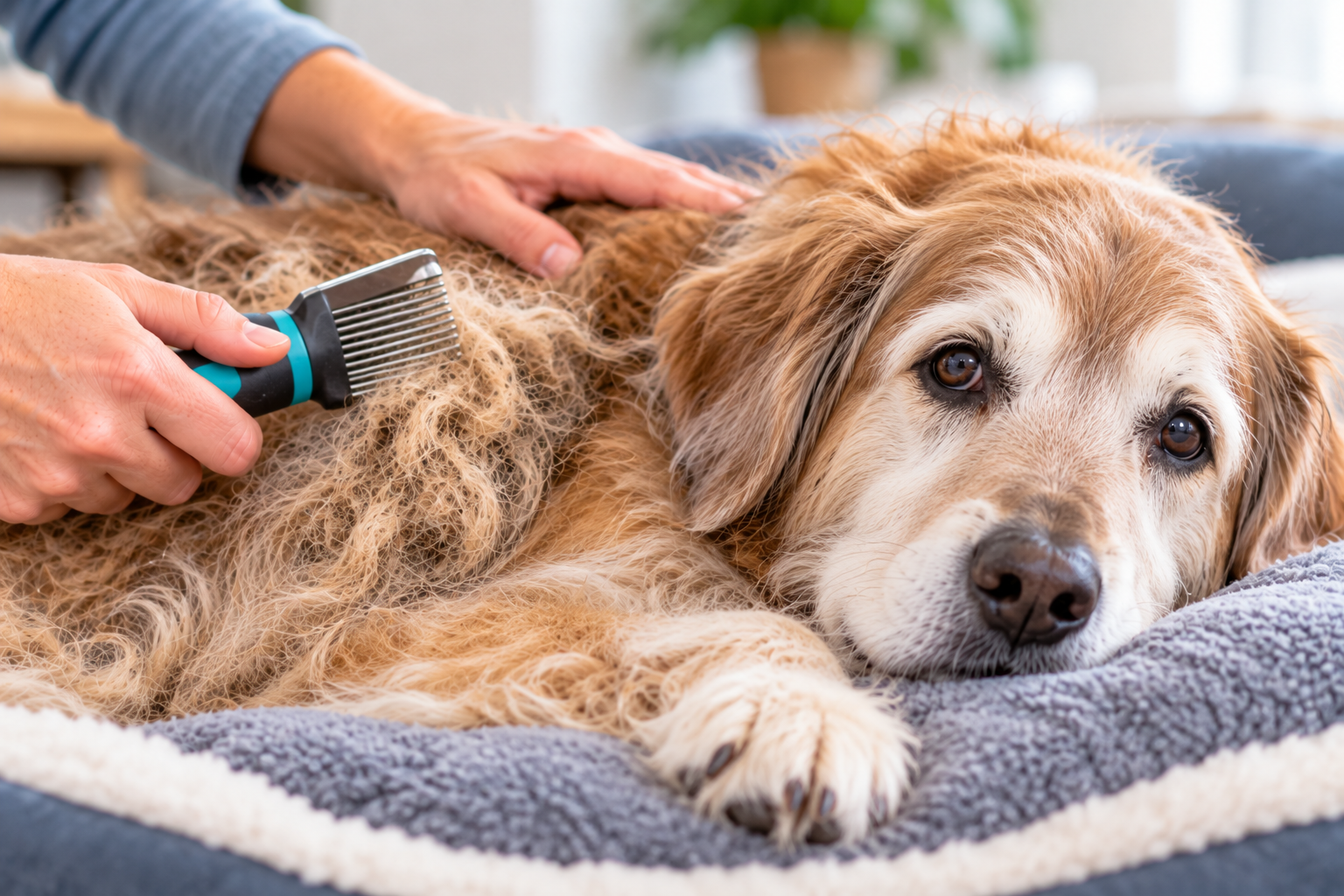
A coat problem should not require long periods of uncomfortable standing or restraint.
Some older dogs cannot stand comfortably for as long as they once did. Others may dislike having a leg lifted, the neck turned, or the body held in one position for an extended grooming session.
A mat that might once have been worked through over time may no longer be worth a long detangling session if the process causes fatigue or discomfort.
The goal is not simply to save the coat. It is to solve the matting problem while making grooming as manageable as possible for the dog.
Long grooming sessions may become tiring even when the dog remains cooperative.
Reaching the belly, inner legs, tail, or rear coat may require positions the dog no longer finds comfortable.
Some dogs may lick, scratch, or reposition themselves less, allowing loose coat to remain trapped longer.
Longer periods on bedding can create friction in areas such as the hips, sides, chest, and legs.
A dog that previously tolerated brushing may become less comfortable with pulling or repeated repositioning.
Coat texture, density, skin condition, or grooming tolerance may change over time.
Grooming tolerance can vary from one day to another. Before working on a mat, notice whether the dog is already tired, reluctant to stand, sensitive to touch, or uncomfortable changing positions.
If the dog cannot comfortably remain in the position needed to reach the mat, that matters just as much as the mat itself.
Home dematting is most reasonable when the tangle is small, movable, clearly separate from the skin, and the dog can stay comfortable during brief handling.
Do not turn one knot into a long grooming session. If the mat cannot be improved without repeated pulling, stop.
Standing is not required if side-lying or sitting works better for the dog.
Hold above a loose tangle when possible to reduce direct pulling.
Use small controlled movements instead of pulling through the center of the knot.
Let the dog rest or change position before fatigue builds.
Finishing the mat today is not more important than keeping the session manageable.
A stable surface can reduce the effort needed to balance during grooming.
Some coat areas can be worked while the dog rests instead of requiring prolonged standing.
Several brief grooming checks may be easier than one long session that leaves the dog exhausted.
Do not force legs, neck, tail, or body into positions the dog resists or cannot comfortably maintain.
Focus first on areas most likely to tighten, such as behind the ears, armpits, collar area, belly, and legs.
A shorter trim can reduce grooming time and help keep coat care manageable.
If an older dog suddenly resists handling, cries out, struggles to stand, or becomes unusually sensitive around a particular area, stop the grooming attempt.
The response may be related to the mat, the skin underneath, discomfort from positioning, or another issue that cannot be determined from coat care alone.
A veterinarian can help evaluate new or significant changes in comfort, movement, behavior, skin, or grooming tolerance.
Dense or widespread matting can require more brushing, pulling, standing, and repositioning than an older dog comfortably tolerates.
An experienced groomer may be able to remove the matted coat more efficiently and help establish a shorter, easier-to-maintain style.
Veterinary evaluation may be appropriate when there is significant pain, weakness, difficulty standing, open skin, bleeding, swelling, discharge, strong odor, or another concerning change.
Visit Dog Matting Help →Frequent brief sessions may be easier than waiting for a full grooming day.
Check behind ears, armpits, collars, belly, legs, hips, and tail before tangles tighten.
A comb can reveal smaller tangles beneath fluffy outer coat.
Moisture and repeated friction can contribute to tangling in dogs that rest more often.
Lower-maintenance coat length can reduce the amount of brushing and positioning required.
Professional maintenance is usually easier before matting becomes dense or widespread.
Get the broader picture on mat severity, prevention, coat care, and professional help.
Read the guide →Learn how tight mats can pull the skin and make normal movement or grooming uncomfortable.
Read about matting pain →Build a coat-care routine that catches tangles before they require longer grooming sessions.
Prevention guide →Return to the main hub for body-area guides, severe matting help, prevention, and tools.
Visit Matting Help →Keep sessions brief, use comfortable positioning, work only on loose tangles that can be handled gently, and stop when the dog becomes tired, painful, or uncomfortable.
Not always. Sitting or lying down may be more comfortable for some grooming tasks. The goal is secure positioning without unnecessary strain.
Dense or skin-tight matting may be more comfortably removed than repeatedly brushed out. An experienced groomer can assess the safest method.
Changes in movement, resting time, self-grooming, coat condition, moisture, brushing tolerance, or grooming frequency can all contribute.
Stop when the dog shows pain, fatigue, significant resistance, difficulty standing, or cannot remain safely positioned for the grooming task.
Veterinary guidance may be appropriate for new pain, weakness, difficulty standing, sudden handling sensitivity, skin wounds, swelling, discharge, bleeding, or other concerning changes.
An older dog does not need to tolerate a long, exhausting dematting session just to preserve coat length. Shorter sessions, easier positioning, a practical trim, or professional removal can all be better choices when they protect comfort.