Dandruff or flaky skin
Dry flakes may be related to skin dryness, grooming habits, environmental conditions, allergies, parasites, or other skin issues.
Review dandruff guidance →
Use common coat and skin changes as clues to decide what may be related to grooming, what deserves closer attention, and when it is time to contact a veterinarian.
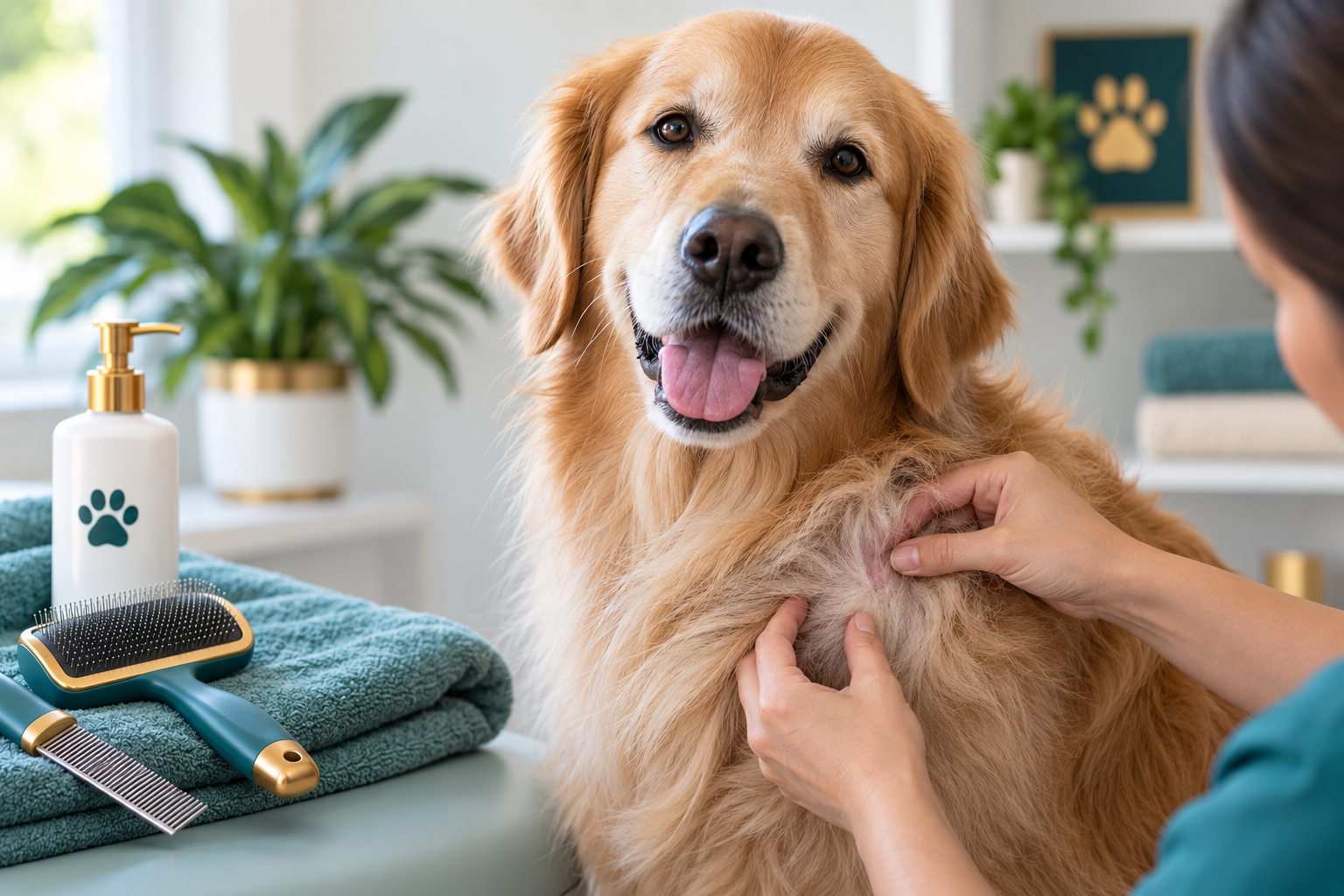
Dandruff, odor, redness, itching, thinning hair, and greasy skin may need different kinds of care.
Brushing, bathing, drying, and mat prevention can improve many coat issues. But persistent itching, wounds, odor, discharge, hair loss, inflammation, and recurring skin changes may point to something that needs veterinary evaluation.
A dull or tangled coat may respond to better grooming. A dog that is scratching constantly, developing bald areas, smelling strongly, or showing painful skin changes may need more than coat care.
These symptoms can have several possible causes. Use them as a starting point, not as a diagnosis.
Dry flakes may be related to skin dryness, grooming habits, environmental conditions, allergies, parasites, or other skin issues.
Review dandruff guidance →Shedding can be normal, but bald spots, patterned thinning, broken hair, or progressive coat loss deserve closer attention.
Review hair-loss guidance →Fleas, allergies, mites, dry skin, infections, and hot spots are among the issues that can make a dog scratch repeatedly.
Review itching causes →Damp coat, ears, yeast, skin infection, dirty collars, or trapped moisture can all contribute to odor.
Review odor causes →Excess oil, buildup, skin irritation, or underlying skin problems may leave the coat feeling greasy soon after grooming.
Review skin & coat care →Redness may follow friction, overbrushing, moisture, allergies, parasites, infection, or repeated scratching.
Review skin & coat care →Crusts and scabs can form after scratching, irritation, parasites, infection, wounds, or other skin conditions.
Review skin & coat care →Hot spots can become painful quickly and often involve redness, moisture, licking, chewing, or damaged skin.
Read VCA hot-spot guidance →Tight matting can trap moisture, pull on the skin, and hide wounds, redness, infection, or painful areas underneath.
Review matting wounds →Grooming can help maintain the coat, but it does not diagnose or treat infections, allergies, parasites, wounds, or other medical causes of skin and coat changes.
If a symptom is severe, spreading, painful, or repeatedly returns, it is safer to have your veterinarian examine the dog.
The type of problem matters more than how noticeable it looks.
Coat-maintenance problems where the skin appears healthy and the dog is comfortable.
Problems involving pain, damaged skin, infection-looking changes, or unexplained symptoms.
A quick skin-and-coat check can give your groomer or veterinarian much better information than simply saying, “Something looks wrong.”
Use these guides for a deeper look at specific symptoms.
Understand common causes of flakes and when grooming may help.
Read the guide →Learn the difference between ordinary shedding and concerning coat loss.
Read the guide →Review common causes of itching and warning signs that need attention.
Read the guide →Browse the main Dematly hub for skin, coat, grooming, and care guidance.
View the hub →Quick answers about grooming, coat changes, and when to seek help.
Stop brushing, clipping, bathing, or detangling an area that is bleeding, swollen, weeping, very red, painful, or producing strong odor or discharge. Contact a veterinarian for evaluation.