Fine strands
Silky hair may be more prone to breakage when repeatedly pulled or brushed too aggressively.

Keep a fine, silky coat smooth, comfortable, and easier to maintain with practical guidance for brushing, combing, bathing, drying, tangle prevention, coat length, and professional grooming.
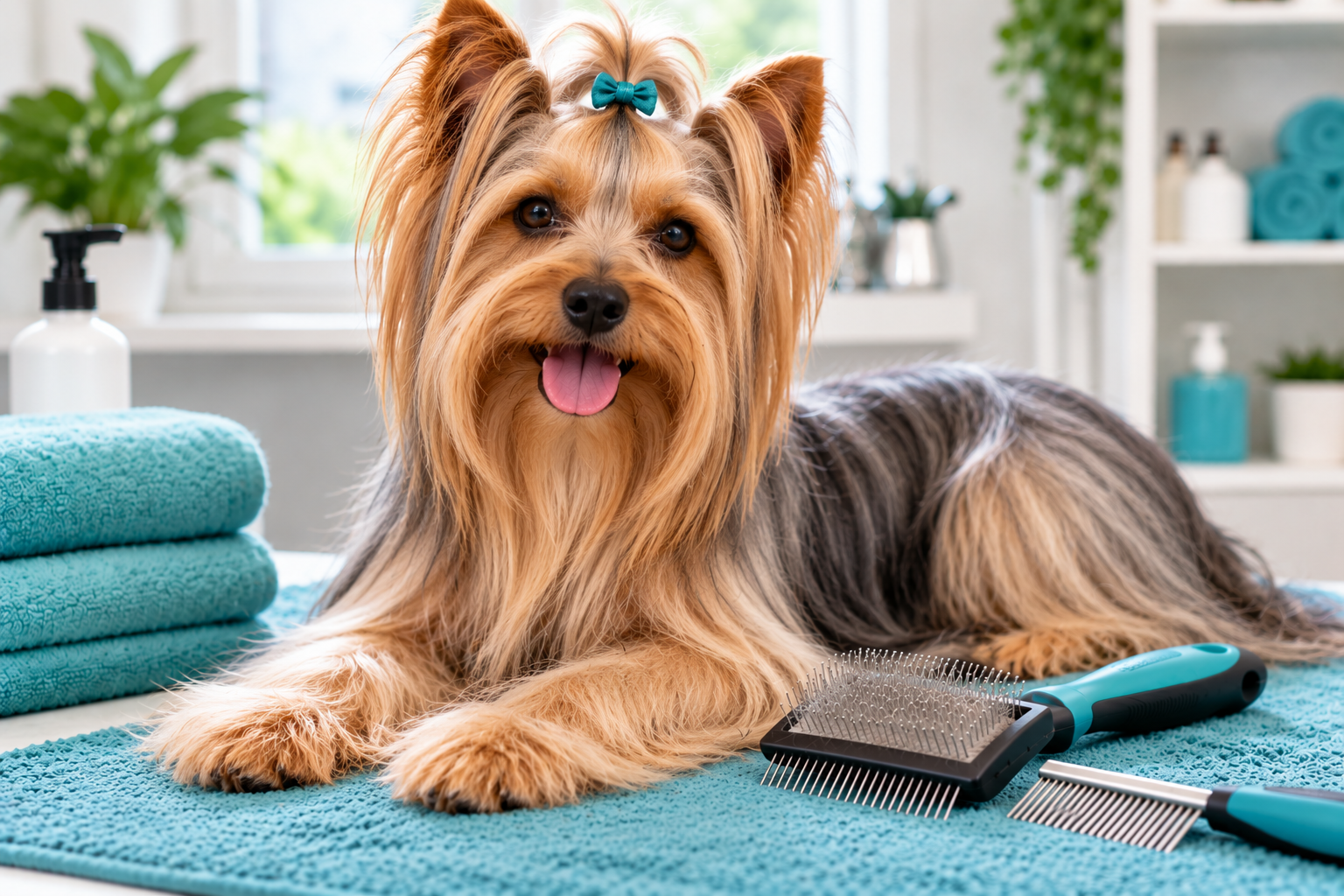
Silky hair can tangle, split, and break when it is pulled aggressively or allowed to stay damp and knotted.
Silky coats often have fine, smooth hair that can lie close to the body or grow long and flowing. The coat may feel lighter than a dense curly or double coat, but fine strands can still knot, split, and mat when friction and moisture build up.
The goal is to keep the coat separated and comfortable without overbrushing or repeatedly pulling through fragile tangles.
Small tangles are much easier to manage than tight knots. Regular coat checks help prevent repeated pulling and unnecessary breakage.
Fine texture changes the way tangles, friction, and grooming pressure affect the coat.
Silky hair may be more prone to breakage when repeatedly pulled or brushed too aggressively.
Collars, harnesses, sleeping, leg movement, and longer furnishings can cause fine hairs to wrap together.
Damp silky hair can clump and tangle more easily, especially in longer coats.
The longer the coat becomes, the more often it usually needs brushing and comb checks.
A coat may look smooth while small knots are forming behind the ears, under collars, or near the legs.
Slow section brushing is generally easier on fine coat than forcing a tool quickly through resistance.
Silky coats respond well to a simple routine that prevents small tangles from becoming difficult knots.
The frequency depends on coat length, activity, friction, moisture, and the individual dog's tendency to tangle.
Review Grooming RoutinesFine hair often knots first where there is repeated movement or friction.
Good bathing habits can make brushing easier instead of creating more tangles.
Existing tangles can tighten after getting wet, especially in longer fine coats.
Product residue can leave the coat feeling heavy or make sensitive skin uncomfortable.
Avoid rough towel rubbing that twists hair together. Make sure longer areas are not left damp.
Fine silky hair can be damaged by repeated pulling, rough brushing, tight knots, friction, or overly aggressive detangling.
Preventing tangles early is usually easier on the coat than trying to save length after a knot has already become dense and tight.
Read the Dog Matting GuideLong silky coats can be beautiful, but they require more frequent care.
Shorter hair generally means fewer friction tangles and less brushing time.
Moderate coat length can preserve a silky appearance while reducing some of the daily maintenance.
Longer silky coats usually need more brushing, comb checks, drying, and professional maintenance.
Smooth hair can still hide redness, flakes, irritation, parasites, wounds, bumps, thinning hair, or damp areas near the skin.
Part the coat periodically and look beneath the surface, especially if the dog begins scratching more than usual or the coat develops an unusual odor.
Bleeding, swelling, discharge, open wounds, severe itching, marked pain, unusual odor, spreading redness, or sudden hair loss should not be treated as ordinary brushing problems. Contact a veterinarian for concerning skin changes.
Professional grooming can make long silky coats easier to maintain, especially when brushing, bathing, drying, trimming, and coat length become difficult to manage consistently at home.
A groomer can also help choose a more practical length if the coat repeatedly develops tangles between appointments.
Review Professional GroomingContinue with the guide or tool that matches what your dog needs next.
Review broader maintenance guidance for longer coats.
Read the long-coat guide →Understand why tangles become mats and when home detangling should stop.
Read the matting guide →Match grooming tools to coat texture, length, tangles, and sensitivity.
Use the finder →Review itching, odor, flakes, hair changes, and other skin concerns.
View skin & coat care →Quick answers for keeping fine hair smooth, comfortable, and manageable.
Fine silky hair does not benefit from forceful detangling. Catch tangles early, work slowly, stop when grooming causes pain, and choose a coat length that is realistic to maintain.