01
Coat texture
Curly, silky, woolly, long, and mixed-texture coats may hold loose hair and tangle easily.

Repeat matting is often a combination of coat type, friction, moisture, trapped loose hair, brushing technique, and grooming frequency. Finding the pattern is more useful than simply brushing harder every time another knot appears.
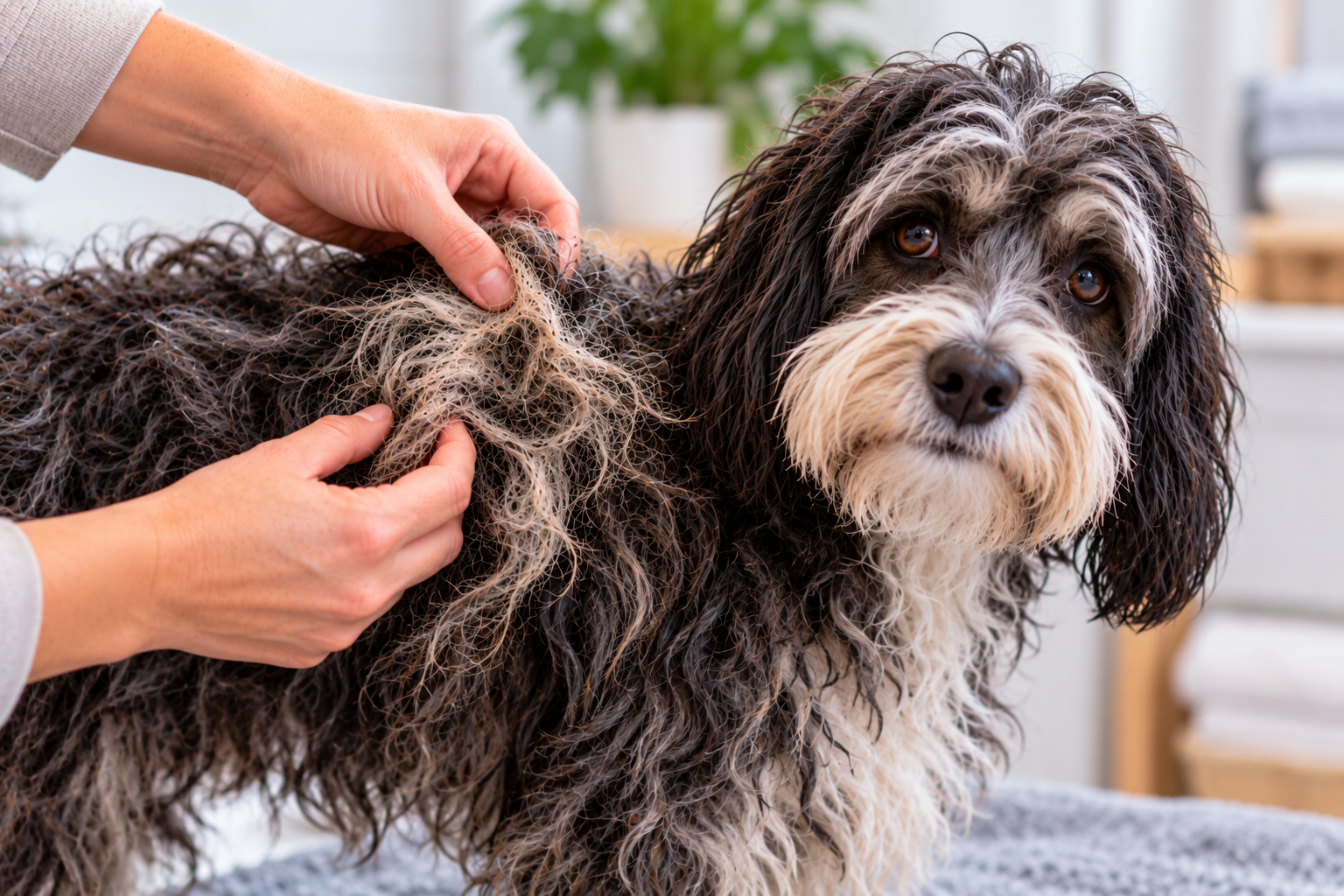
Where the mats keep returning often tells you what part of the routine needs changing.
Some dogs can develop tangles surprisingly quickly even with regular coat care. Long, curly, silky, woolly, and dense coats may naturally hold shed hair instead of releasing it easily.
Add friction from collars, harnesses, sleeping positions, leg movement, moisture, outdoor debris, or a coat that is not fully dried, and tangles can return in the same places again and again.
The solution is usually not one marathon brushing session. A repeatable routine that matches the dog’s coat and matting hotspots tends to work better.
Curly, silky, woolly, long, and mixed-texture coats may hold loose hair and tangle easily.
Collars, harnesses, movement, bedding, and body contact repeatedly rub neighboring hairs together.
Rain, bathing, swimming, damp grass, or incomplete drying can encourage clumping.
Shed hair can remain inside the coat and twist into surrounding strands.
A fluffy outer layer can look brushed while small tangles remain closer to the skin.
Small knots have more time to collect loose hair, tighten, and combine with nearby tangles.
Instead of thinking of the entire coat as one problem, track the places where tangles repeatedly develop.
If one area keeps matting while the rest of the coat stays manageable, friction, moisture, or a grooming blind spot may be involved.
A better routine does not necessarily mean brushing for hours. The goal is to catch small tangles before they become firm mats and to focus extra attention on the areas that repeatedly cause trouble.
Short, consistent coat checks can be more useful than waiting until the entire coat needs major detangling.
Note the exact places where knots return most often.
Separate the coat so you can work through more than the visible surface.
A comb can help reveal small tangles that a brush may glide over.
Rain, swimming, wet grass, harness use, and outdoor play may change how quickly tangles develop.
If knots repeatedly form before the next grooming session, shorten the interval.
A brush can smooth the visible coat while knots remain underneath, particularly on thick, curly, or long-coated dogs.
Behind the ears, under collars, armpits, belly, and inner legs often need more attention than large flat areas of coat.
Once a tangle has collected loose hair and become firm, routine brushing may no longer be enough to separate it comfortably.
Water can tighten existing tangles, so hidden knots may be harder to manage after the bath.
Dense or long hair that stays damp may clump and tangle more easily, especially in friction zones.
Different coat textures and grooming jobs may require different brushes, combs, or professional techniques.
If a coat that was previously manageable suddenly begins tangling much faster, consider what else has changed.
Changes in coat texture, excessive scratching, licking, skin irritation, reduced grooming tolerance, or difficulty moving comfortably can all affect coat maintenance.
Dematly cannot diagnose the cause of a skin or coat change. A veterinarian can help when recurring matting appears alongside concerning skin, health, or behavior changes.
If the coat repeatedly reaches the point where brushing pulls the skin or causes distress, the routine needs adjusting.
Shorter grooming intervals, a more manageable coat length, better drying, different tools, or professional grooming may reduce the cycle.
Dense or skin-tight mats should not be repeatedly forced apart simply because they have returned before.
Give recurring trouble spots extra attention instead of treating every area equally.
Section longer or dense coat so hidden tangles are easier to find.
A final comb check can reveal tangles that remain beneath a smooth surface.
Pay attention to dense, curly, or hidden areas after bathing and wet weather.
Do not wait for the coat to reach the same matted condition before intervening.
A beautiful coat still needs to match the amount of maintenance that can be provided consistently.
Build a practical routine for catching tangles before they tighten.
Prevention guide →Get the broader picture on causes, severity, coat care, and professional help.
Read the guide →Match grooming tools to coat texture, length, sensitivity, and tangling needs.
Use the finder →Return to the main hub for body-area guides, severe matting help, prevention, and tools.
Visit Matting Help →Surface brushing may miss tangles closer to the skin. Coat texture, friction, trapped loose hair, moisture, and the time between grooming sessions can also contribute.
Fine hair, head movement, scratching, moisture, and collar friction can cause repeat tangling behind the ears.
Longer coat can create more opportunities for neighboring strands and loose hair to twist together, though coat texture and maintenance also matter.
Yes. Wet or incompletely dried coat can clump, especially in dense, curly, long, or high-friction areas.
More frequent checks may help, but technique matters too. Sectioning the coat, reaching the full coat depth, and using a comb check can be more effective than simply brushing longer.
Veterinary evaluation may be appropriate when sudden or repeated coat changes occur with itching, skin sores, redness, unusual odor, discharge, excessive licking, or other concerning changes.
When the same areas repeatedly mat, use the pattern to make coat care easier rather than waiting for another difficult dematting session. The right schedule, technique, coat length, and professional support can make a major difference.