1
My dog keeps getting mats
Understand why mats form, where they hide, what can be managed at home, and when tight matting needs professional removal.
Go to Matting Help →
Build a practical grooming routine around your dog’s coat type, shedding, tangles, skin condition, comfort, and lifestyle — with clear guidance for brushing, bathing, tools, matting, and professional grooming.
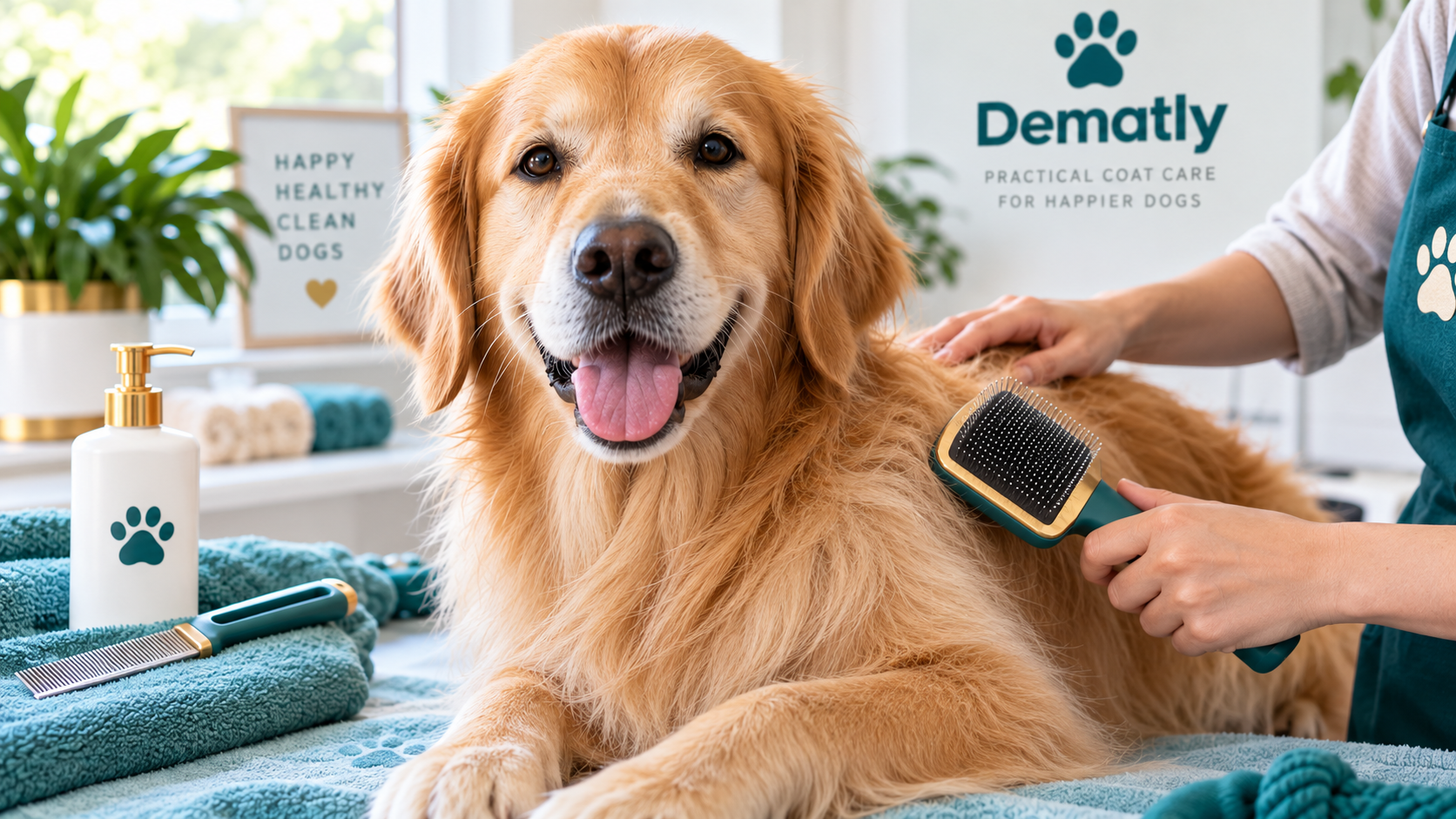
Coat type, length, shedding, matting risk, skin sensitivity, and lifestyle all affect what grooming should look like.
Start with the problem you can see. A dog that sheds heavily, develops mats, smells soon after bathing, scratches frequently, or simply needs a better brushing routine may need very different help.
Dematly separates those problems so you can move from a broad question to a more useful grooming plan.
Coat type affects brushing tools, grooming frequency, matting risk, shedding, drying time, and professional grooming needs. If you are unsure what coat your dog has, start with the Dog Coat Type Finder.
Each area leads to more focused guides, tools, and practical next steps.
Understand why mats form, where they hide, what can be managed at home, and when tight matting needs professional removal.
Go to Matting Help →Build a repeatable plan for brushing, combing, bathing, drying, coat checks, and grooming frequency.
View Grooming Routines →Choose tools based on coat type, length, shedding, tangles, density, and skin sensitivity.
Review Grooming Tools →Learn the differences between short, long, curly, wire, double, silky, and other coat structures.
Review Dog Coat Types →Review itching, flakes, odor, thinning hair, redness, greasy coat, wounds, and other changes that may need closer attention.
View Skin & Coat Care →Understand when professional grooming may be safer, easier, or more practical than continuing at home.
Review Professional Grooming →The details change by coat type, but most coat-care routines follow the same basic sequence.
The biggest mistake is treating grooming as something that only happens when the dog becomes dirty or tangled. Regular maintenance makes each session easier.
Build a Grooming RoutineThe same brush, schedule, and technique will not work equally well for every dog.
Use these free tools when you need a more specific next step.
Match grooming tools to coat type, coat length, shedding, tangles, and skin sensitivity.
Use the finder →Narrow down your dog’s coat type before choosing grooming tools and routines.
Find the coat type →Estimate matting risk and build a practical grooming schedule.
Check matting risk →Prepare useful questions about handling, matting, pricing, coat care, and appointment expectations.
Prepare questions →Review common symptoms and understand when grooming may no longer be enough.
Review symptoms →Understand which professional may be the better next call based on the problem you are seeing.
Review the guide →Recurring mats, odor, itching, hair loss, skin irritation, or a dog that suddenly resists grooming are all signs to slow down and look more closely.
Sometimes the answer is a better grooming technique. Other times, professional grooming or veterinary care is the safer next step.
A professional groomer can be the practical choice when a coat is very dense, heavily shedding, repeatedly matting, difficult to dry, or stressful for the dog to maintain at home.
Review Professional GroomingThese core Dematly sections take you deeper into each part of grooming.
Understand how coat structure changes grooming needs.
View coat types →Build practical brushing, bathing, drying, and maintenance schedules.
View routines →Understand brushes, combs, undercoat tools, and other equipment.
View grooming tools →Review common skin and coat concerns that can affect grooming.
View skin & coat care →Quick answers for building a safer, more realistic grooming routine.
Stop when brushing, combing, clipping, or detangling causes pain. Tight mats, wounds, swelling, bleeding, discharge, severe itching, or abnormal skin should not be treated as ordinary home grooming problems.