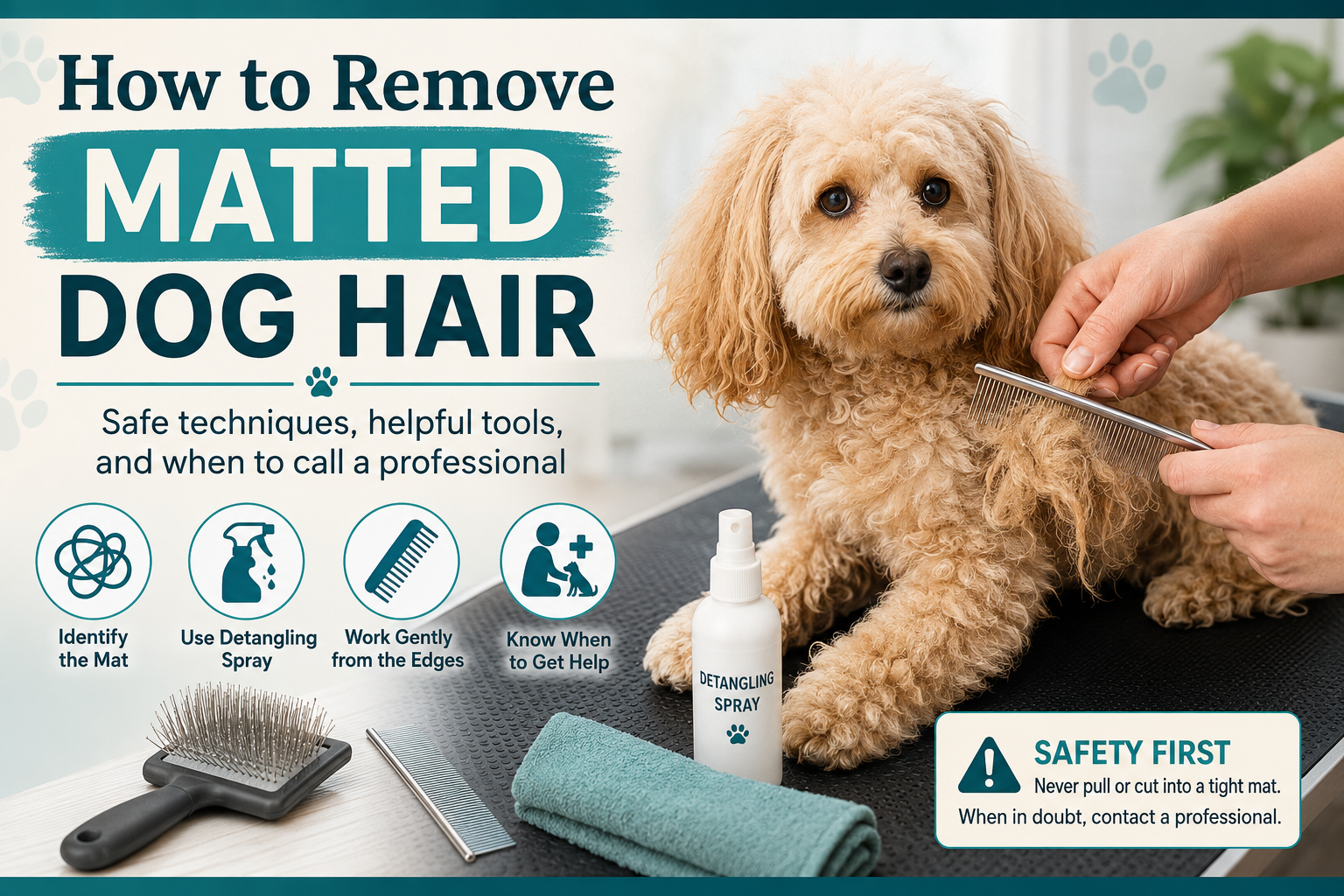
How to Remove Matted Dog Hair
Matted dog hair can be frustrating, but it should never be handled with force.
A small loose tangle may be separated with patience, the right brush, a comb, and a dog-safe detangling product. A tight mat close to the skin is different. Pulling, cutting blindly, or forcing a tool through the coat can hurt the dog and may lead to cuts, brush burn, fear, or damaged skin.
The safest way to remove matted dog hair depends on how tight the mat is, where it is located, how the dog reacts to handling, and whether the skin underneath looks healthy.
This guide explains when you may be able to handle a small mat at home, what tools can help, what to avoid, and when to call a professional groomer or veterinarian.
First, Check How Serious the Mat Is
Before using any tool, look at the mat closely.
Ask yourself:
- Is the mat loose or tight?
- Can you see the skin beneath it?
- Does the dog react when you touch it?
- Is the mat small and isolated?
- Is it near the ears, armpits, groin, tail, feet, or face?
- Is there redness, odor, swelling, bleeding, moisture, or discharge?
- Are several mats connected together?
- Is the coat packed close to the skin?
A loose tangle is not the same as severe matting.
If the mat is tight against the skin, painful, widespread, or hiding irritated skin, stop and contact a professional groomer. If there are wounds, infection signs, strong odor, swelling, bleeding, or obvious pain, contact a veterinarian.
When You May Be Able to Remove a Mat at Home
Home mat removal may be reasonable when the mat is:
- small
- loose
- not tight to the skin
- not painful when touched
- not near a high-risk area
- not hiding damaged skin
- easy to move slightly with your fingers
- on a dog that stays calm during gentle handling
Even then, go slowly.
The goal is not to rip the mat out. The goal is to loosen it enough that the hair can separate without pulling hard on the skin.
When Not to Remove Matted Hair at Home
Do not attempt home removal when:
- the mat is tight against the skin
- the dog cries, snaps, growls, freezes, or panics
- the skin cannot be seen
- several mats are connected
- the mat is wrapped around a leg, tail, toe, or ear
- the area smells bad or feels damp
- there is redness, swelling, bleeding, scabbing, or discharge
- the mat is near the eye, mouth, groin, armpit, or sanitary area
- the dog has health, pain, mobility, or breathing concerns
- you feel tempted to cut under the mat with scissors
In these cases, professional help is safer.
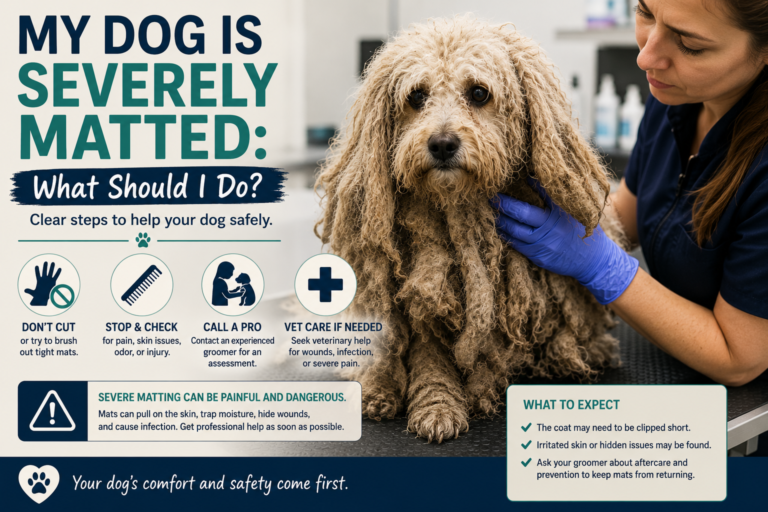
Severe matting should not be treated like ordinary brushing. Read Dematly’s guide on what to do when your dog is severely matted if the coat is packed, painful, or widespread.
Tools That May Help With Small Loose Mats
For small, manageable mats, you may need:
- metal grooming comb
- slicker brush or pin brush
- dog-safe detangling spray
- towel
- treats
- good lighting
- non-slip surface
- small grooming scissors only for trimming loose hair away from the skin, not cutting under mats
- professional help if the mat does not loosen easily
A metal comb is especially important because it helps you check whether the hair is truly separated.
For tool guidance, use the Dog Brush and Comb Finder or read Best Brushes for Long-Haired Dogs.
Step 1: Keep the Dog Calm and Secure
Choose a quiet area with good lighting.
Place the dog on a stable, non-slip surface. Keep the session short. Have treats nearby if the dog responds well to rewards.
Do not chase the dog around with a brush. Do not hold the dog down forcefully to finish the mat.
If the dog becomes fearful or unsafe to handle, stop.
A calm five-minute session is better than a long stressful fight.
Step 2: Find the Edges of the Mat
Use your fingers to gently feel where the mat begins and ends.
Do not pull upward. That can tug the skin.
Try to understand whether the mat is loose or attached tightly near the skin. If you cannot tell where the skin is, do not cut. If the mat feels like a hard pad against the body, stop and call a groomer.
For loose tangles, start working from the outer edge, not the center.
Step 3: Use a Dog-Safe Detangling Spray
A dog-safe detangling spray may help reduce friction on small loose mats.
Lightly mist the mat according to the product instructions. Do not soak the coat. Avoid the eyes, mouth, ears, and irritated skin unless the product label specifically says it is safe for that use.
Let the product sit briefly if the label recommends it.
A spray can help with small tangles. It does not make tight mats safe to rip out.
Step 4: Separate the Mat With Your Fingers
Before using a brush, try to loosen the outer hairs with your fingers.
Hold the hair near the skin with one hand to reduce pulling. With the other hand, gently separate tiny sections from the outside of the mat.
Work slowly.
If the mat begins to loosen, continue a little at a time. If the dog reacts as if it hurts, stop.
Do not dig your nails into the skin. Do not twist the mat. Do not yank.
Step 5: Use the Comb From the Outside In
Once the mat has loosened, use the wider side of a metal comb near the outer edge of the tangle.
Start at the ends of the hair, away from the skin. Work in tiny movements.
If the comb catches, stop and separate more with your fingers. Do not force the comb through.
The comb should gradually move through the hair with less resistance. If resistance stays firm, the mat may be too tight for home removal.
Step 6: Brush the Area Gently
After the tangle begins to open, use a suitable brush for the coat.
For long, curly, wavy, or Doodle-type coats, a slicker brush may help separate the hair. For silky coats, a pin brush may be gentler. For short coats, a rubber brush or soft bristle brush may be more appropriate.
Use light pressure. Brush in short strokes. Support the coat near the skin so the brush does not pull hard.
Then check the area again with the comb.
Step 7: Stop Before the Skin Gets Irritated
Even a small mat can become a problem if the dog is brushed too long.
Stop if you see:
- redness
- flaking
- swelling
- bleeding
- heat
- strong sensitivity
- repeated licking
- the dog pulling away
- growling, snapping, crying, or freezing
A partly removed mat is not worth injuring the dog.
You can try again later only if the dog remains comfortable and the mat is still loose. If the mat stays tight, call a groomer.
Should You Cut Out a Mat With Scissors?
Be very careful.
Scissors are one of the most common ways owners accidentally cut a dog. Skin can be pulled up into the mat, especially when the hair is tight. What looks like empty space under the mat may actually include folded skin.
Do not slide scissors under a mat and cut blindly.
If trimming is needed, it is safer for a professional groomer to evaluate the coat. Groomers have clippers, blades, training, and experience working around skin folds and sensitive areas.
If you are tempted to cut because the mat will not brush out, that is usually a sign to stop and get help.
Are Clippers Safer Than Scissors?
Clippers can be safer than scissors in experienced hands, but they are not risk-free.
Clippers can cause:
- nicks
- clipper burn
- irritated skin
- overheating
- uneven coat removal
- injury around folds, ears, armpits, or sanitary areas
Matted coats often require a blade to pass underneath the mat. If the mat is very tight, that may mean clipping close to the skin. This is why severely matted dogs often come home much shorter than owners expected.
A professional groomer can decide whether the mat can be safely clipped or whether a veterinarian should be involved.
What About Dematting Tools?
Dematting combs, mat splitters, and bladed tools can be risky.
Many of these tools contain sharp edges. They may cut hair, but they can also cut skin or make the dog uncomfortable when used incorrectly.
Avoid bladed dematting tools when:
- the mat is tight
- the skin cannot be seen
- the dog is moving
- the area is sensitive
- the mat is near the face, ears, armpits, groin, tail, or feet
- the dog is painful or fearful
- the coat is severely matted
These tools are not a shortcut for severe matting.
How to Remove Mats Behind the Ears
Behind the ears is one of the most common matting areas.
The hair is often fine, soft, and constantly moving. Mats can tighten quickly.
For a small loose tangle behind the ear:
- Hold the ear gently and avoid pulling.
- Use your fingers to separate the outer hairs.
- Apply a small amount of dog-safe detangling spray if appropriate.
- Use the comb only at the outer edge.
- Stop if the dog pulls away or the mat feels tight.
Do not cut behind the ear with scissors. Ear leather is thin and can be hidden inside the mat.
If the mat is tight behind the ear, contact a groomer.
How to Remove Mats in the Armpits
Armpit mats are high risk because the skin is thin, loose, and constantly moving.
These mats often form from friction between the front legs and chest. Harness straps can make them worse.
Do not pull hard. Do not cut blindly. Do not force a brush into the armpit.
If the mat is small and loose, try finger separation and gentle combing from the outside. If it is tight, painful, or hard to see clearly, a groomer should handle it.
How to Remove Mats Around the Tail or Sanitary Area
Tail and sanitary-area mats can trap moisture, urine, fecal matter, and odor.
This area can become sensitive or irritated quickly.
Do not use scissors close to the skin in this area. Do not force brushing if the dog is uncomfortable.
If the mat is dirty, damp, smelly, tight, or near irritated skin, call a groomer or veterinarian. Medical attention may be needed if there is redness, swelling, wounds, discharge, or severe pain.
How to Remove Mats From Paws and Toes
Mats between the toes can be uncomfortable and may affect walking.
The skin between the toes is sensitive. Dogs may pull their feet away suddenly, making cutting risky.
For loose debris or a small tangle, gently separate the hair with your fingers and use a small comb carefully. If the mat is tight between the toes or pads, have a groomer handle it.
A veterinarian may be needed if the paw is swollen, bleeding, painful, or infected.
What to Do After a Mat Is Removed
Once the mat is gone, check the skin.
Look for:
- redness
- irritation
- flaky skin
- sores
- swelling
- bleeding
- odor
- moisture
- discharge
- lumps or bumps
- excessive licking
If the skin looks healthy, gently comb the area and keep it dry.
If the skin looks irritated or damaged, contact a veterinarian or ask your groomer what they observed during grooming.
Do not apply human creams, oils, or medications without veterinary guidance.
How to Prevent the Mat From Coming Back
After removing a mat, ask why it formed.
Common reasons include:
- surface brushing
- missed comb checks
- wet coat drying tangled
- friction from a collar or harness
- long coat length
- missed grooming appointment
- wrong brush
- shedding trapped in the coat
- dog resisting brushing
- coat change after puppyhood
Prevention usually requires a better routine, not just a better tool.
Helpful habits include:
- brush in small sections
- follow brushing with a comb check
- dry the coat thoroughly after baths or rain
- check behind ears and under legs often
- remove collars or harnesses when not needed
- keep the coat at a manageable length
- schedule professional grooming before mats develop
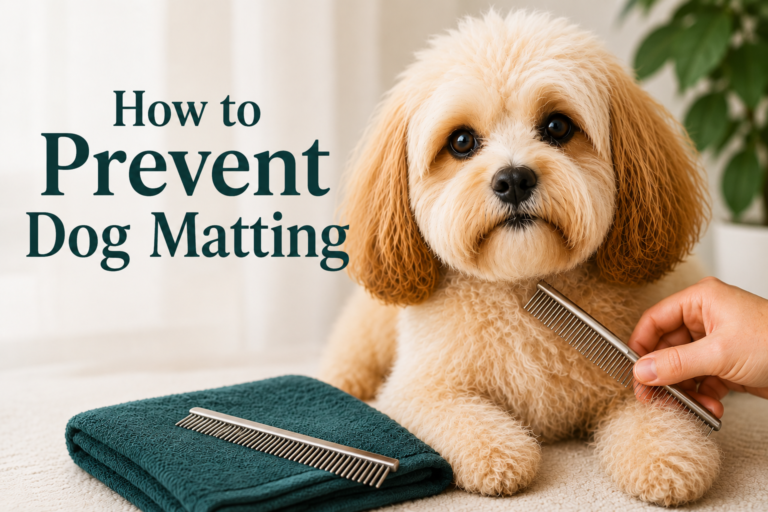
Read How to Prevent Dog Matting for a full prevention routine.
When to Book a Groomer Instead
Book a professional groomer when:
- mats are close to the skin
- the coat feels packed or felted
- the dog is uncomfortable
- the mat is in a sensitive area
- you cannot see the skin
- several mats are connected
- the coat is too thick to separate
- the dog becomes stressed or unsafe
- you do not have the right tools or experience
Be honest when booking. Tell the groomer the dog is matted and describe where the mats are. Ask about matting fees, haircut expectations, and what happens if the groomer finds skin problems.
You can use the Dog Groomer Interview Assistant to prepare questions before calling.
When to Call a Veterinarian
A veterinarian may be needed when:
- the dog has open wounds
- there is bleeding
- the skin smells infected
- the dog is in pain
- the area is swollen
- there is discharge
- the dog cannot be safely handled
- sedation may be needed
- the dog is elderly or medically fragile
- the mat is wrapped tightly around a limb, toe, tail, or ear
- the dog has fever, weakness, or unusual behavior
A groomer handles coat. A veterinarian handles medical concerns.
Sometimes both are needed.
Final Thoughts
Removing matted dog hair safely starts with knowing when not to remove it yourself.
Small, loose tangles may be handled at home with patience, finger separation, a dog-safe detangling spray, gentle brushing, and a metal comb. Tight mats, painful mats, mats near sensitive areas, and mats hiding damaged skin should be handled by a professional.
Do not pull hard. Do not cut blindly under mats. Do not force a brush or comb through the coat.
The goal is not just to get the hair out.
The goal is to protect the dog’s skin, comfort, and trust.
Related Dematly Resources
- How to Prevent Dog Matting
- What to Do When Your Dog Is Severely Matted
- Dog Brush and Comb Finder
- Best Brushes for Long-Haired Dogs
- Grooming Curly and Doodle-Type Coats
- Dog Grooming Tools
- Professional Dog Grooming
Dematly provides general educational dog-grooming information and does not replace advice from a veterinarian or qualified professional groomer.