My Dog Is Severely Matted: What Should I Do?
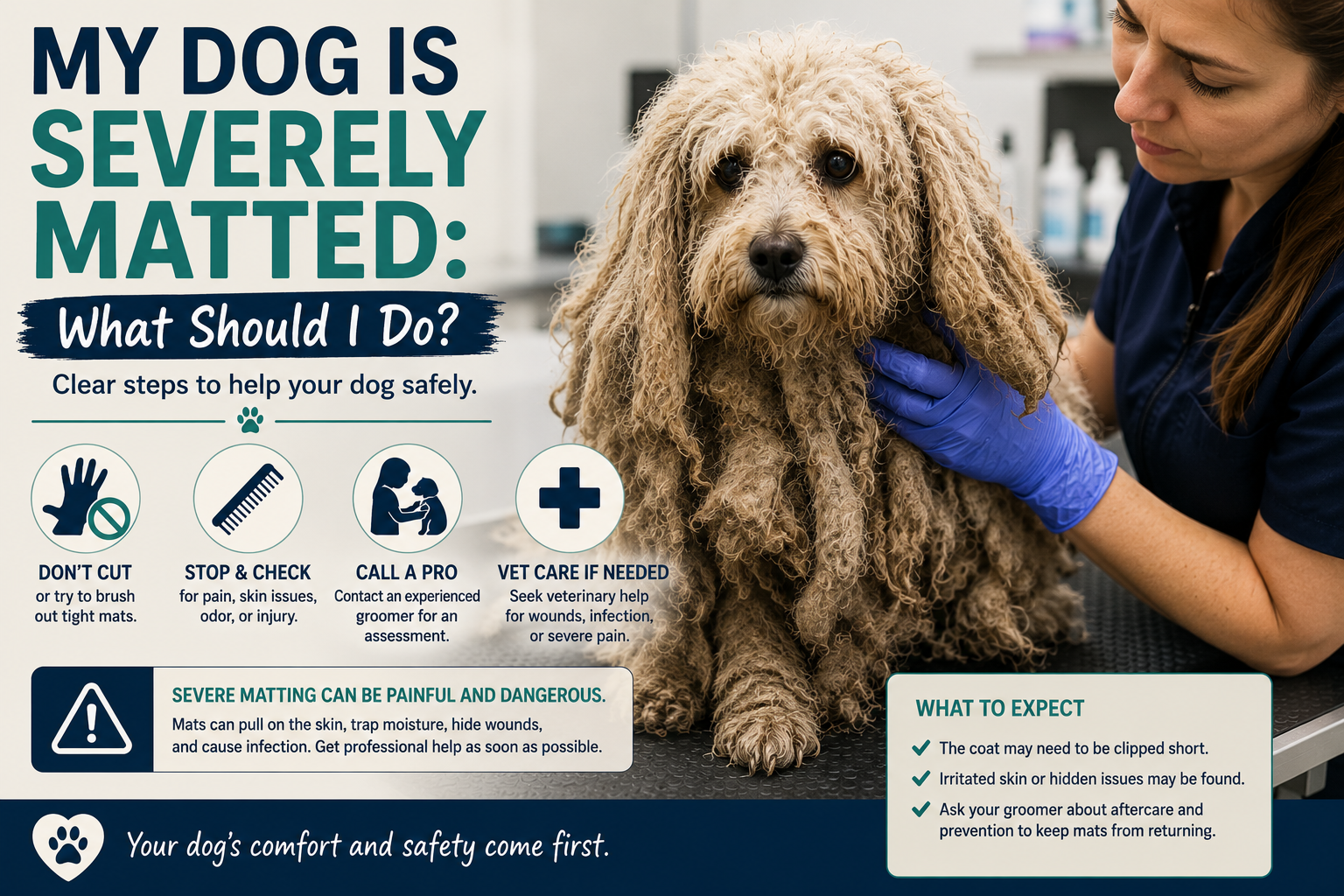
If your dog is severely matted, the safest first step is to stop brushing, stop cutting, and take a closer look before trying to fix it at home.
Severe matting is not just messy hair. Tight mats can pull on the skin, trap moisture, hide wounds, cause irritation, and make grooming painful. The ASPCA notes that even mild mats can cause skin irritation and progress into infected lesions, and severe matting can become a serious welfare issue.
A small loose tangle may sometimes be handled gently. A severely matted coat usually needs a professional groomer, and sometimes a veterinarian.
The goal is not to save every inch of hair.
The goal is to protect your dog’s skin, comfort, and safety.
First, Do Not Panic
A severely matted dog can make an owner feel embarrassed, guilty, or overwhelmed.
Take a breath.
Matting can happen for many reasons: missed grooming appointments, illness, a difficult coat change, the wrong brush, surface brushing, wet weather, harness friction, a dog that resists grooming, or simply not realizing how quickly the coat was tightening underneath.
The important thing now is to stop the matting from getting worse and choose the safest next step.
Do Not Cut Under the Mats With Scissors
This is the biggest warning.
Do not slide scissors under a mat and cut.
A dog’s skin can be pulled up into the mat. What looks like space between the coat and the body may actually include folded skin. One quick cut can create a serious wound.
Avoid:
- kitchen scissors
- craft scissors
- human hair scissors
- trying to “snip just a little”
- cutting behind the ears
- cutting in the armpits
- cutting near the groin, tail, paws, belly, or face
The ASPCA advises letting a professional groomer handle haircutting and warns against shaving down to the skin or trying to cut the hair yourself with scissors.
Do Not Force a Brush or Comb Through Tight Mats
Severe mats can be painful.
If you force a brush through the coat, you may pull hard on the skin over and over. That can cause brush burn, irritation, fear, and more pain.
Stop brushing if:
- the dog cries, growls, snaps, freezes, or panics
- the mat feels hard or felt-like
- the comb cannot enter the coat
- the skin cannot be seen
- the mat is tight to the body
- several mats are connected
- the area smells bad or feels damp
- the skin looks red, swollen, scabbed, or injured
A dog that is already severely matted does not need a long painful brushing session. The dog needs a proper assessment.
Check for Emergency Warning Signs
Some matted dogs need a veterinarian before grooming.
Call a veterinarian if you notice:
- bleeding
- open wounds
- swelling
- strong odor
- discharge
- severe redness
- the dog seems painful when touched
- weakness or unusual behavior
- overheating
- trouble breathing
- mats wrapped tightly around a leg, toe, tail, or ear
- the dog cannot be handled safely
A groomer handles coat. A veterinarian handles medical concerns.
Sometimes both are needed.
Decide Whether This Is a Groomer Situation or a Vet Situation
For many severely matted dogs, the next step is an experienced professional groomer.
A groomer may be able to clip the coat safely, remove the mats, and explain what skin issues they find underneath.
But a veterinarian may be the better first stop when the dog has pain, wounds, infection signs, severe distress, or a medical condition that makes grooming risky.
Use this simple guide:
Call a groomer when:
The dog is matted but otherwise stable, alert, breathing normally, and there are no obvious wounds, swelling, discharge, or severe pain.
Call a veterinarian when:
The dog appears sick, injured, infected, overheated, extremely painful, medically fragile, or unsafe to handle.
Call both when:
The matting is severe and you are unsure. Ask the groomer whether they can safely assess the coat, and ask the vet whether medical evaluation is needed first.
Be Honest When You Call the Groomer
When booking, do not say “just a few knots” if the coat is severely matted.
Say clearly:
“My dog is severely matted. Some mats may be close to the skin. I need an assessment and want to know the safest option.”
Ask:
- Do you work with severely matted dogs?
- Can you assess whether the coat should be clipped?
- What happens if you find irritated skin or wounds?
- Would you refer this to a vet first?
- How short might the coat need to be?
- Do you charge extra for severe matting?
- How long will the appointment take?
- What aftercare should I expect?
A good groomer will appreciate honest information. Severe matting is slower, harder, and riskier than normal grooming.
The Dog May Need to Be Clipped Short
This can be hard to hear, but it is often true.
If the mats are tight, widespread, or close to the skin, a groomer may need to clip underneath the mat. That may mean a short haircut.
This is not about punishing the owner or making the dog look bad.
It may be the kindest way to stop painful pulling and remove a coat that cannot be brushed out safely.
Trying to save a long coat can sometimes mean hours of pulling, stress, and discomfort. In many severe cases, clipping is more humane.
Do Not Bathe a Severely Matted Dog First
Bathing a severely matted dog can make the coat harder to manage.
Water may tighten tangles. Dense mats may hold moisture close to the skin. Shampoo may not rinse properly through packed coat.
If the coat is severely matted, contact a groomer or veterinarian before bathing.
The ASPCA explains that regular brushing and combing can help prevent tangles and keep the skin clean, but dense matting requires caution and may need professional help.
What You Can Do Safely While Waiting for the Appointment
While waiting for the groomer or vet:
- keep the dog dry
- keep the dog comfortable
- prevent scratching or chewing if possible
- avoid tight collars, harnesses, or clothing rubbing the mats
- do not pull at the mats
- do not cut under the mats
- do not use human creams, oils, or medications
- watch for pain, odor, swelling, wounds, or behavior changes
- take clear photos if you need to explain the matting by phone
You can gently inspect the coat with your fingers, but do not tug.
What Happens at the Groomer
The groomer may check:
- how close the mats are to the skin
- whether the coat is pelted or felted
- whether brushing is possible
- whether clipping is safer
- whether the dog can tolerate the appointment
- whether any areas look medically concerning
The groomer may call you if they find wounds, parasites, severe irritation, or a reason to stop the appointment.
Some dogs may need several shorter appointments. Some may need veterinary grooming or sedation handled through a veterinary clinic.
What to Expect After the Mats Are Removed
Your dog may look very different after severe matting is removed.
You may see:
- short coat
- uneven areas
- red or irritated skin
- scabs or sores
- thin patches
- hidden lumps or bumps
- sensitive skin
- increased licking or scratching
- tired behavior after the appointment
Some skin problems were already there but hidden under the mats.
Contact a veterinarian if there is bleeding, swelling, discharge, strong odor, severe redness, pain, or worsening irritation.
How to Prevent This From Happening Again
After the immediate problem is handled, build a routine that is realistic.
That may mean:
- a shorter haircut
- more frequent brushing
- comb checks after brushing
- professional grooming every few weeks
- checking high-risk areas daily
- drying the coat properly after baths or rain
- removing harnesses when not needed
- asking the groomer what tools to use
- using a coat length you can maintain
A long coat is only a good choice if it can be kept comfortable.
A shorter, clean, mat-free coat is often better than a long coat that repeatedly becomes painful.
Final Answer
If your dog is severely matted, do not try to cut the mats out yourself. Do not force a brush through tight mats. Do not bathe the coat first.
Call an experienced professional groomer for an assessment. Call a veterinarian if there are wounds, odor, swelling, discharge, severe pain, overheating, illness, or if the dog cannot be safely handled.
Severe matting can be painful and dangerous, but the right next step can bring relief.
Your dog does not need shame.
Your dog needs safe help.
Related Dematly Resources
- How to Remove Matted Dog Hair
- What to Do When Your Dog Is Severely Matted
- How to Prevent Dog Matting
- Dog Brush Comb Finder
- Dog Groomer Interview Assistant
- Professional Dog Grooming
Dematly provides general educational dog-grooming information and does not replace advice from a veterinarian or qualified professional groomer.