Wounds From Matting in Dogs: What Owners Should Know
Finding a wound under your dog’s matted coat can be scary.
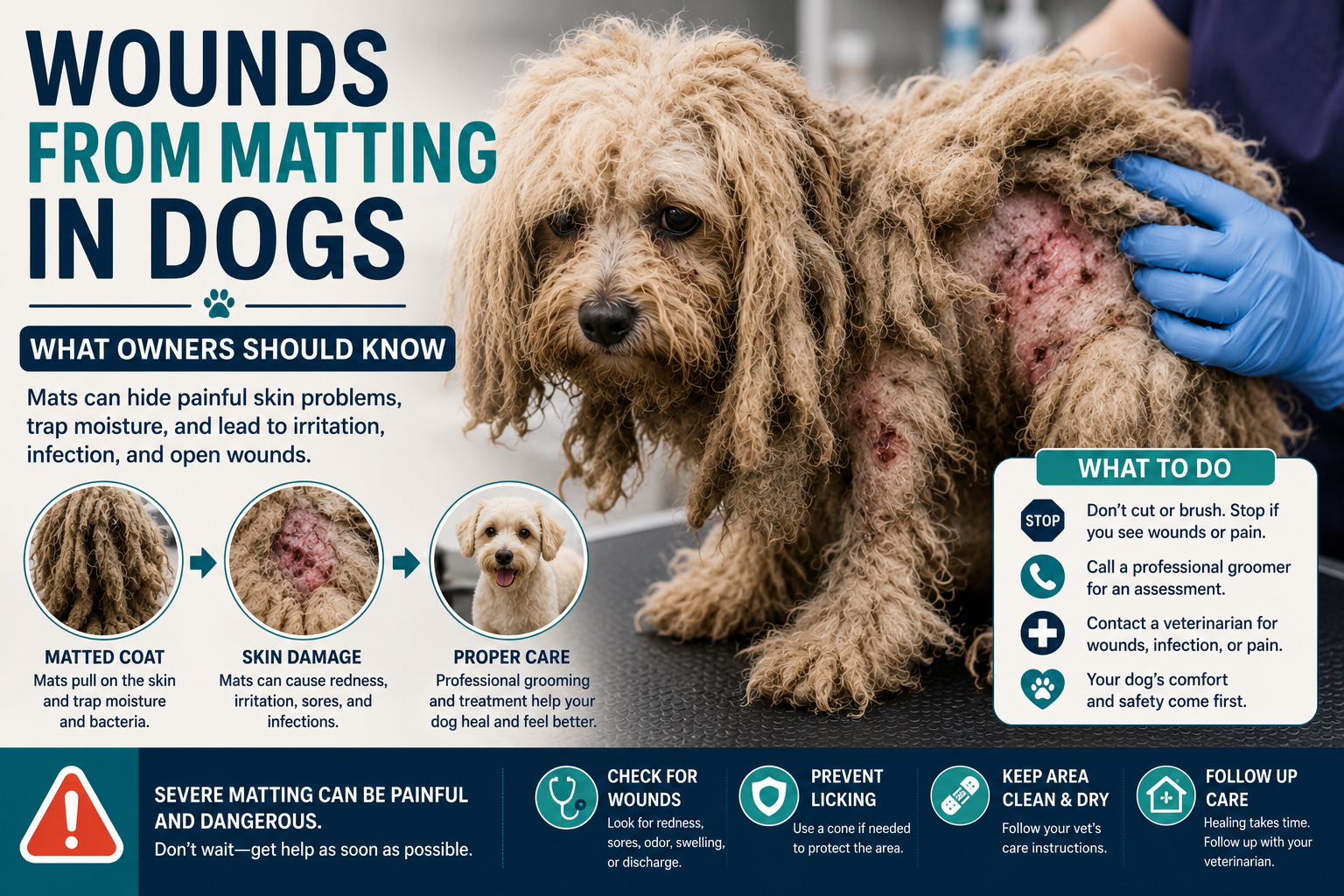
A dog may look fluffy on the outside while the skin underneath is red, sore, wet, scabbed, infected, or painful. Mats can pull on the skin, trap moisture, hide dirt and debris, and make it hard for air to reach the area. Even mild mats can irritate the skin, and the ASPCA warns that matted coats can progress to infected lesions in some cases.
If you find wounds from matting in dogs, treat it as a health concern — not just a grooming problem.
The safest first step is simple: stop brushing, stop cutting, and contact a veterinarian if the skin is open, bleeding, swollen, infected-looking, painful, smelly, or wet.
Can Matted Dog Hair Cause Wounds?
Yes, matted dog hair can contribute to wounds and skin damage.
A mat is not just a knot in the coat. When hair becomes tangled and tight, it can pull against the skin whenever the dog walks, lies down, scratches, or moves. Over time, that pulling can irritate the skin and create sore areas.
Mats can also trap moisture close to the body. Damp skin under thick hair can become irritated, itchy, and more vulnerable to infection. In some dogs, matting may hide hot spots, sores, cuts, parasites, or skin infections until the coat is finally separated or removed.
VCA notes that hot spots are moist, red, raw areas that dogs may lick or scratch, and they can sometimes be hidden under matted fur.
What Wounds From Matting May Look Like
Skin problems under mats can vary.
You may notice:
- red skin
- raw patches
- scabs
- bleeding
- swelling
- crusting
- damp skin
- bad odor
- discharge
- hair stuck to the skin
- darkened or thickened skin
- the dog licking or chewing one area
- pain when the coat is touched
- mats wrapped tightly around a leg, toe, tail, or ear
Sometimes the wound is not visible until the mat is removed. That can make it seem as if grooming caused the wound, when the problem may have already been hidden beneath the coat.
That said, grooming a severely matted dog can also cause injury if done roughly or with the wrong tools. This is why severe matting should be handled carefully.
Stop Grooming If You See an Open Wound
If you discover an open wound, bleeding, swelling, pus, strong odor, or raw skin, stop grooming that area.
Do not keep brushing over the wound.
Do not pull the mat away from the skin.
Do not cut under the mat with scissors.
Do not apply random creams, oils, peroxide, alcohol, essential oils, or human wound products without veterinary guidance.
The skin may already be painful or infected. Continuing to groom over the area can make the wound worse.
When to Call a Veterinarian
Call a veterinarian when matting is associated with:
- open wounds
- bleeding
- swelling
- pus or discharge
- strong odor
- raw or wet skin
- severe redness
- signs of pain
- the dog crying, growling, snapping, or panicking when touched
- a mat wrapped tightly around a limb, toe, tail, or ear
- weakness, fever, or unusual behavior
- maggots or insects in the wound
- skin that looks black, deeply damaged, or infected
- a dog that cannot be safely handled
A groomer can remove coat. A veterinarian treats wounds, infection, pain, swelling, and medical complications.
In some cases, the dog may need both veterinary care and professional grooming.
Can a Groomer Remove Mats Around a Wound?
Sometimes, but it depends on the wound and the dog’s condition.
A professional groomer may be able to carefully remove surrounding coat if the skin is not severely damaged and the dog can be safely handled. But if the area is open, infected, extremely painful, or medically risky, a veterinarian should be involved first.
A groomer should not be expected to diagnose or treat wounds.
If the groomer finds a wound during mat removal, they may stop the service and recommend veterinary care. That is the responsible thing to do.
Why You Should Not Cut Mats Off Yourself
Scissors are dangerous around mats.
When a mat tightens, it can pull the skin upward into the hair. What looks like empty space beneath the mat may actually include folded skin. Cutting under the mat can slice the dog’s skin badly enough to require stitches.
VCA’s hot-spot first-aid guidance warns not to use scissors to trim hair away from a hot spot because it is easy to accidentally cut the dog’s skin and create a bigger problem.
This is especially important around:
- ears
- armpits
- groin
- belly
- sanitary area
- paws
- tail
- skin folds
- any area where the dog moves suddenly
If you feel tempted to cut because the mat will not move, that is usually a sign to stop and call a professional.
What to Do While Waiting for the Vet or Groomer
While waiting for help, keep the dog as comfortable as possible.
Do not bathe the dog unless your veterinarian tells you to. Water can tighten mats, trap moisture, and make irritated skin worse.
You can:
- keep the dog dry
- prevent licking or chewing if you have a safe cone or recovery collar
- avoid tight collars, harnesses, or clothing over the area
- keep the dog indoors and comfortable
- take clear photos to show the vet or groomer
- write down when you first noticed the wound
- watch for odor, swelling, discharge, bleeding, pain, or behavior changes
Do not apply medication unless your veterinarian tells you what to use.
Why Licking Can Make Wounds Worse
Dogs often lick painful or itchy areas.
Licking may seem like normal grooming, but repeated licking can irritate the skin and delay healing. VCA explains that licking a sore spot can irritate nerve endings, causing more itching, licking, biting, and scratching — a cycle that can lead to deeper skin infection.
If your dog keeps licking a wound, ask your veterinarian whether a cone, recovery collar, medication, or other treatment is needed.
Are Hot Spots the Same as Wounds From Matting?
Not always, but they can overlap.
A hot spot is a red, moist, irritated area of skin that can develop quickly. Dogs often worsen hot spots by licking, biting, or scratching. Matted fur may hide hot spots and hold moisture against the skin.
A wound from matting may be caused by pulling, friction, trapped moisture, infection, or skin damage hidden beneath the coat.
Either way, raw, wet, infected-looking, painful, or spreading skin problems should be evaluated by a veterinarian.
What If the Wound Appears After Grooming?
Sometimes owners notice wounds only after a matted coat is removed.
This can happen because the mat was hiding the problem. The skin may have been irritated, infected, bruised, or damaged before anyone could see it clearly.
It is also possible for skin to be nicked or irritated during mat removal, especially when the mat is tight against the body.
If you see a wound after grooming:
- ask the groomer what they noticed
- keep the area clean and dry as instructed
- prevent licking
- contact a veterinarian if the wound is open, bleeding, swollen, painful, smelly, or worsening
- avoid blaming yourself before you understand what happened
The priority is getting the dog treated and comfortable.
Common Places Wounds May Hide Under Mats
Wounds and skin irritation may hide in high-friction or high-moisture areas, including:
- behind the ears
- under the collar
- armpits
- chest
- belly
- groin
- sanitary area
- tail base
- feet and toes
- inner legs
- beard or mouth area
- places where a harness rubs
These areas should be checked often, especially on long-haired, curly, silky, or double-coated dogs.
How Vets May Treat Wounds From Matting
Treatment depends on what the veterinarian finds.
A veterinarian may:
- clip hair around the wound safely
- clean the area
- check for infection
- prescribe antibiotics when needed
- prescribe pain relief or anti-inflammatory medication
- recommend an e-collar to prevent licking
- treat parasites or allergies if involved
- provide wound-care instructions
- recommend follow-up visits
Do not give human pain medicine or leftover pet medication without veterinary direction. Some medications that are safe for people can be dangerous for dogs.
How to Prevent Wounds From Matting
Prevention starts with keeping mats from tightening in the first place.
Helpful habits include:
- brush in small sections
- use a comb to check your work
- focus on high-risk areas
- keep the coat dry
- brush before bathing
- dry the coat thoroughly after baths, rain, or swimming
- remove collars or harnesses when not needed
- choose a coat length you can realistically maintain
- schedule professional grooming before mats become severe
- ask your groomer where mats are forming
- contact a veterinarian when skin looks irritated or painful
A shorter, comfortable coat is often kinder than a long coat that repeatedly becomes painful and matted.
When Matting Becomes Neglect
Many good owners are surprised by how quickly mats can form. Life happens. A dog may resist brushing, get sick, go through a coat change, or miss appointments.
But once severe matting, wounds, odor, or infection appear, the dog needs prompt help.
Ignoring wounds under mats can allow pain and infection to worsen. In severe cases, untreated matting can create serious welfare problems. The ASPCA has reported cases where severely matted coats were associated with infected lesions, maggots, surgical procedures, and even amputations.
The goal is not shame.
The goal is getting the dog safe, treated, and on a better routine.
Final Answer
Wounds from matting in dogs should be taken seriously.
If you find raw skin, bleeding, swelling, odor, discharge, pain, or an open sore under a mat, stop grooming and call a veterinarian. Do not cut under mats with scissors, do not force a brush through the coat, and do not apply random products without veterinary guidance.
A groomer may help remove the coat safely, but wounds and infection need veterinary care.
Your dog needs relief, not blame.
Handle the coat gently, get professional help, and build a mat-prevention routine once the skin has healed.
Related Dematly Resources
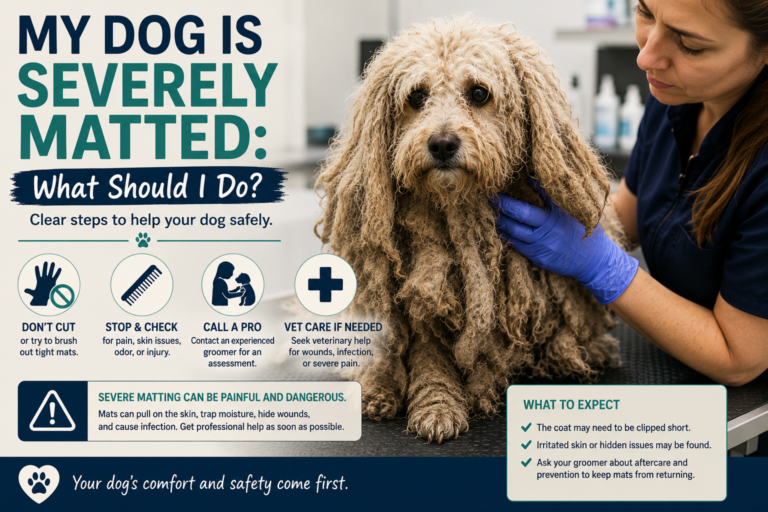
- My Dog Is Severely Matted: What Should I Do?
- How to Remove Matted Dog Hair
- What to Do When Your Dog Is Severely Matted
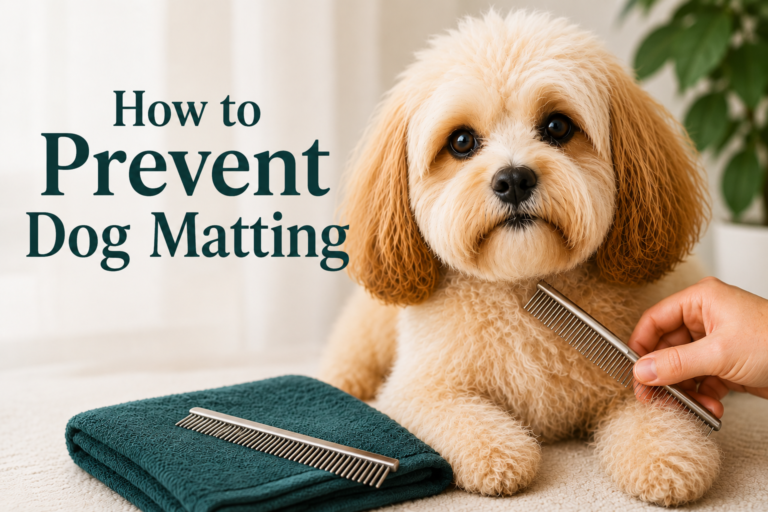
- How to Prevent Dog Matting
- Dog Skin and Coat Care
- Dog Brush and Comb Finder
- Professional Dog Grooming
Dematly provides general educational dog-grooming information and does not replace advice from a veterinarian or qualified professional groomer. Contact a veterinarian when a dog has wounds, infection signs, severe pain, swelling, discharge, odor, bleeding, or another medical concern.