My Dog Is Covered in Mats Along His Sides — What Should I Do?
Finding a few small tangles in your dog’s coat is one thing. Running your hand along his side and realizing that much of the hair has turned into thick, connected mats can be alarming.
The first thing to do is stop pulling or trying to cut the mats out quickly.
Mats along a dog’s sides can range from loose surface tangles that can still be worked apart to tight, felt-like sections that sit directly against the skin. What you should do next depends on how tight the mats are, how much of the body they cover, and how your dog reacts when you touch them.
If the coat feels hard, packed, painful, or attached closely to the skin, this is usually no longer a simple brushing job.
First, Check How Serious the Matting Is
Before reaching for a brush, gently feel the coat with your fingers.
Do not pull on the mats.
Try to determine whether you can separate the hair enough to see or feel the skin underneath.
A mild mat may feel like a small knot within otherwise loose hair. You may still be able to move it away from the skin slightly.
More serious matting often feels very different.
Watch for:
- Large, flat sections of tangled hair
- Mats that feel hard or felt-like
- Several mats connected together
- Hair that seems stuck directly against the skin
- A comb that cannot pass through the coat
- Skin you cannot see or reach beneath the mat
- A bad smell coming from the coat
- Dampness or debris trapped underneath
- Your dog flinching, turning around, growling, crying, or trying to get away when you touch the area
If the mats cover much of both sides of the body, your dog may have severe matting rather than a few isolated tangles.
Do Not Start Cutting the Mats With Scissors
This is one of the most important things to know.
A mat can pull a dog’s skin upward into the tangled hair. That makes it extremely difficult to tell where the mat ends and the skin begins.
What looks like a safe gap underneath the mat may actually contain folded skin.
A dog can also move suddenly while you are cutting.
For those reasons, household scissors are a poor choice for removing tight mats.
If the mats are close to the skin, widespread, or difficult to separate, a professional groomer is usually better equipped to remove the coat with appropriate clippers.
Should I Try Brushing the Mats Out?
That depends on the mat.
If you find a small, loose tangle and your dog is comfortable, you may be able to work on it gently.
Use your fingers first rather than immediately pulling a brush through it.
For a minor tangle:
- Hold the hair gently near the skin so you are not pulling directly on your dog’s body.
- Separate a few hairs at a time with your fingers.
- Work from the outside edge of the tangle rather than pulling from the center.
- Use a suitable comb or brush only after the tangle has begun to loosen.
- Stop if your dog becomes uncomfortable.
Do not turn this into a long battle.
If the mat will not loosen with gentle work, that is useful information. It may need to be clipped rather than brushed out.
Trying harder is not always better.
What If the Entire Side of My Dog Is Matted?
If large portions of your dog’s sides are covered in dense matting, I would not try to brush the whole coat out at home.
That can require hours of pulling and repeated brushing.
Even if you are technically able to save some of the hair, the process may be painful and stressful for your dog.
A professional groomer may recommend clipping the coat short instead.
That can be disappointing when you like your dog’s longer coat, but hair can grow back. The immediate goal is to remove the pulling and get your dog comfortable again.
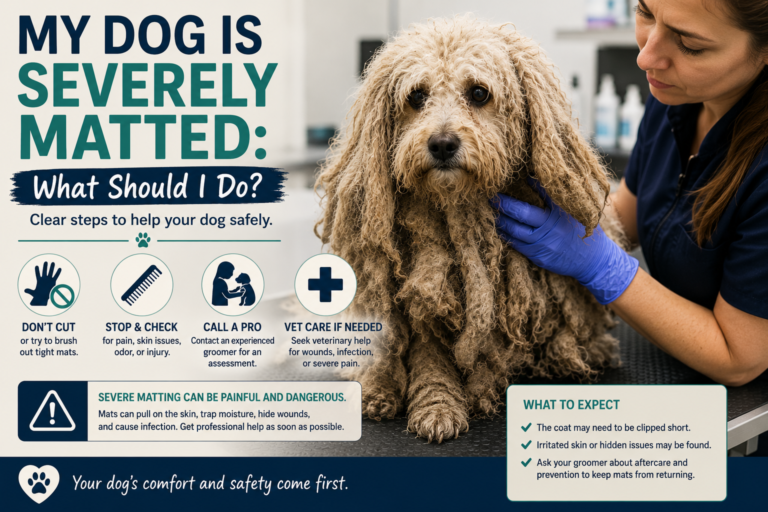
If the matting is extremely tight, covers much of the body, or your dog cannot be handled comfortably, read Dematly’s guide My Dog Is Severely Matted: What Should I Do? before trying more home grooming.
Should I Bathe My Dog Before Removing the Mats?
Usually, do not start by soaking a heavily matted coat.
Water does not automatically loosen tight mats.
Dense tangles can become even harder to work through after getting wet, and shampoo may have difficulty reaching and rinsing from the skin underneath a packed coat.
If the sides are only lightly tangled, normal grooming and bathing may still be appropriate.
But when the coat is tightly matted against the body, deal with the matting first or ask a groomer how they want the dog prepared for the appointment.
Check the Skin Carefully
Matting can hide more than tangled hair.
Once the coat begins separating—or after a groomer clips it away—you may discover irritated skin underneath.
Look for:
- Redness
- Swelling
- Moist or sticky skin
- Scabs
- Bleeding
- Open sores
- Discharge
- Strong odor
- Parasites
- Areas your dog will not allow you to touch
If you see damaged skin, especially open wounds, swelling, discharge, bleeding, or signs that your dog is in significant pain, contact your veterinarian.
A groomer can remove hair, but a groomer does not replace veterinary treatment for an injured or infected skin problem.
Why Do Dogs Get Mats Along Their Sides?
The sides of the body may not seem like an obvious place for matting, but several things can contribute.
Loose hair stays trapped in the coat
In longer, curly, woolly, or dense coats, shed hair can remain caught instead of falling away.
If that loose hair is not brushed and combed out, it can twist together with the surrounding coat.
The coat gets wet
Swimming, rain, bathing, snow, or even lying on damp ground can encourage tangles to tighten as the coat dries.
The dog rolls or sleeps on the same areas
Friction can help hair knot together.
A dog that spends a lot of time lying on one side may develop tangles in areas that rub repeatedly against bedding or furniture.
A harness or clothing rubs the coat
Harness straps, sweaters, jackets, and other clothing can create friction against the sides of the body.
Check underneath anything your dog wears regularly.
Surface brushing misses the hair underneath
A coat may look fluffy and brushed on top while knots are forming closer to the skin.
This is especially common with thick, curly, and longer coats.
When Should I Call a Groomer?
Call a professional groomer when:
- The mats cover a large part of your dog’s sides
- The mats are tight against the skin
- You cannot get a comb underneath or through them
- Your dog appears uncomfortable
- Home brushing is causing distress
- The coat has formed thick connected sections
- You are worried about cutting or hurting your dog
- The dog will not allow you to work safely
Tell the groomer before the appointment that your dog is matted.
That gives them a better idea of what to expect and allows them to tell you whether the dog should come directly to the salon or be evaluated by a veterinarian first.
When Should a Veterinarian Become Involved?
Some matting situations need more than an ordinary grooming appointment.
Contact your veterinarian if your dog has:
- Open wounds
- Bleeding
- Swelling
- Pus or discharge
- A strong foul odor from the skin
- Severe pain
- Difficulty walking
- Mats tightly wrapped around a leg, foot, tail, ear, or other body part
- A medical condition that makes grooming difficult
- Extreme fear or aggression that prevents safe handling
A veterinarian can examine the skin and determine whether treatment is needed.
What Happens If the Groomer Has to Shave My Dog?
Sometimes clipping the coat very short is the safest and most comfortable way to deal with extensive matting.
The dog may look dramatically different afterward.
That does not necessarily mean something went wrong.
A very short clip may be necessary because the groomer has to work underneath the tangled coat rather than cutting through the top of it.
Once the mats are gone, the skin may also look red or irritated because it was previously being pulled and covered.
Ask the groomer what they found underneath the coat and whether anything needs veterinary attention.
How to Keep the Sides From Matting Again
Once the current problem has been handled, prevention becomes much easier.
Get into the habit of using your hands as well as your brush.
Several times a week, run your fingers through:
- Both sides of the body
- Behind the ears
- Beneath the collar
- Under the front legs
- Chest
- Belly
- Inner legs
- Tail
- Feet
- Areas beneath harness straps or clothing
For coats that mat easily, brushing should reach all the way through the coat rather than just smoothing the surface.
Follow with a comb when appropriate. If the comb repeatedly catches in one place, there may still be a developing tangle underneath.
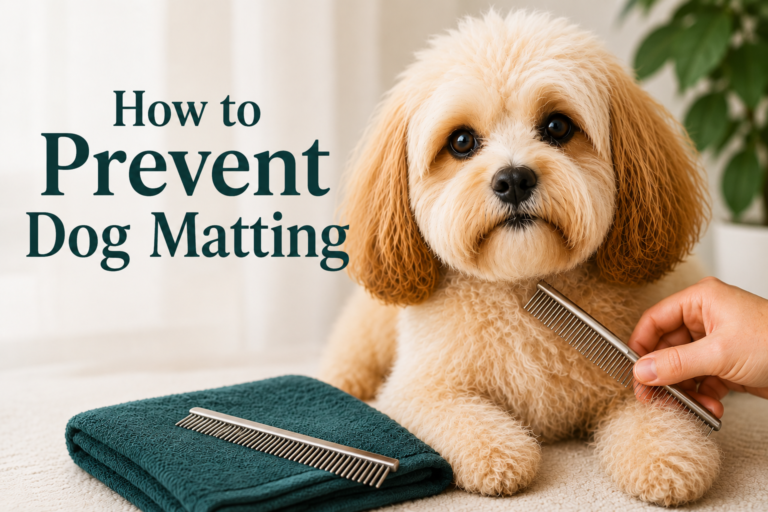
You can also use Dematly’s How to Prevent Dog Matting guide to build a routine based on your dog’s coat.
The Bottom Line
If your dog is covered with mats along his sides, do not panic—but do not attack the coat with scissors or aggressive brushing either.
Start by determining whether the hair contains a few loose tangles or whether large sections have become tight and packed against the skin.
Small, loose tangles may sometimes be worked apart gently.
Large, connected, painful, or skin-tight mats are different. Those are usually safer in the hands of an experienced groomer, and damaged or painful skin may require a veterinarian.
Saving the length of the coat should never be more important than keeping the dog comfortable.
Once the mats are removed, a consistent brushing and combing routine can help prevent the same problem from returning.