How to Prevent Dog Matting
Dog matting usually develops gradually.
A few loose hairs catch around one another. Friction tightens them. Moisture makes the coat clump. Then a small tangle becomes a dense mat sitting close to the skin.
Preventing matting is much easier, safer, and more comfortable than removing a severely packed coat later.
The right routine depends on the dog’s coat type, coat length, activity level, bathing schedule, grooming tolerance, and how often the dog sees a professional groomer. A short-coated dog may need only occasional brushing, while a long, curly, silky, or double-coated dog may need much more frequent attention.
This guide explains the habits that make the biggest difference.
Why Dog Matting Happens
Matting develops when loose or shedding hair becomes trapped in the coat and begins twisting around neighboring hairs.
Common causes include:
- Infrequent brushing
- Brushing only the surface
- Moisture from baths, swimming, rain, or snow
- Friction from collars, harnesses, clothing, or bedding
- Shedding that remains trapped in the coat
- Long or curly hair
- Coat changes during seasonal shedding
- A dog resisting brushing
- Missed grooming appointments
- Medical or mobility issues that make grooming harder
- Dirt, debris, saliva, or urine drying in the coat
Some dogs mat much faster than others. Shih Tzus, Poodles, Bichon Frises, Maltese, Yorkshire Terriers, Doodles, long-coated spaniels, and many double-coated breeds can develop tangles quickly when the coat is not checked regularly.
Start With the Dog’s Coat Type
A mat-prevention routine should match the coat.
Short, smooth coats
Short-coated dogs generally mat less often, but loose hair can still collect around collars, harnesses, skin folds, and areas where moisture remains trapped.
A rubber grooming brush, grooming glove, or soft bristle brush may be enough for routine maintenance.
Long, silky coats
Long, fine hair can tangle easily behind the ears, under the legs, around the tail, and wherever the coat rubs against itself.
These dogs often need frequent section-by-section brushing followed by a comb check.
Curly or wool coats
Curly coats may hold loose hair instead of dropping it onto the floor.
The coat can look fluffy on the surface while forming tight tangles underneath. These dogs often require regular brushing from the skin outward and dependable professional-grooming appointments.
Dense double coats
Double-coated dogs may develop packed undercoat, especially during seasonal shedding.
Removing loose undercoat is important, but aggressive brushing can irritate the skin or damage the coat. Use tools appropriate for the breed and coat condition.
Wiry coats
Wiry coats have different maintenance needs depending on whether the coat is clipped, stripped, or left natural.
A groomer familiar with the coat type can recommend a routine that reduces tangles without damaging texture.
Visit the Dematly Dog Coat Types guide for more help identifying the coat you are maintaining.
Brush All the Way to the Skin
One of the biggest reasons dogs become matted is surface brushing.
The top of the coat may look smooth while tangles continue forming underneath.
The goal is not to scrape the skin. The goal is to work through small sections so the full length of the coat is checked.
A simple method is:
- Separate a small section of coat.
- Hold the hair gently near the skin to reduce pulling.
- Brush from the ends toward the roots.
- Work through only a small area at a time.
- Check the finished section with a comb.
- Move to the next section.
This approach is often called line brushing.
It is especially useful for long, curly, and dense coats.
Always Follow the Brush With a Comb
A brush can glide over the top while leaving tangles underneath.
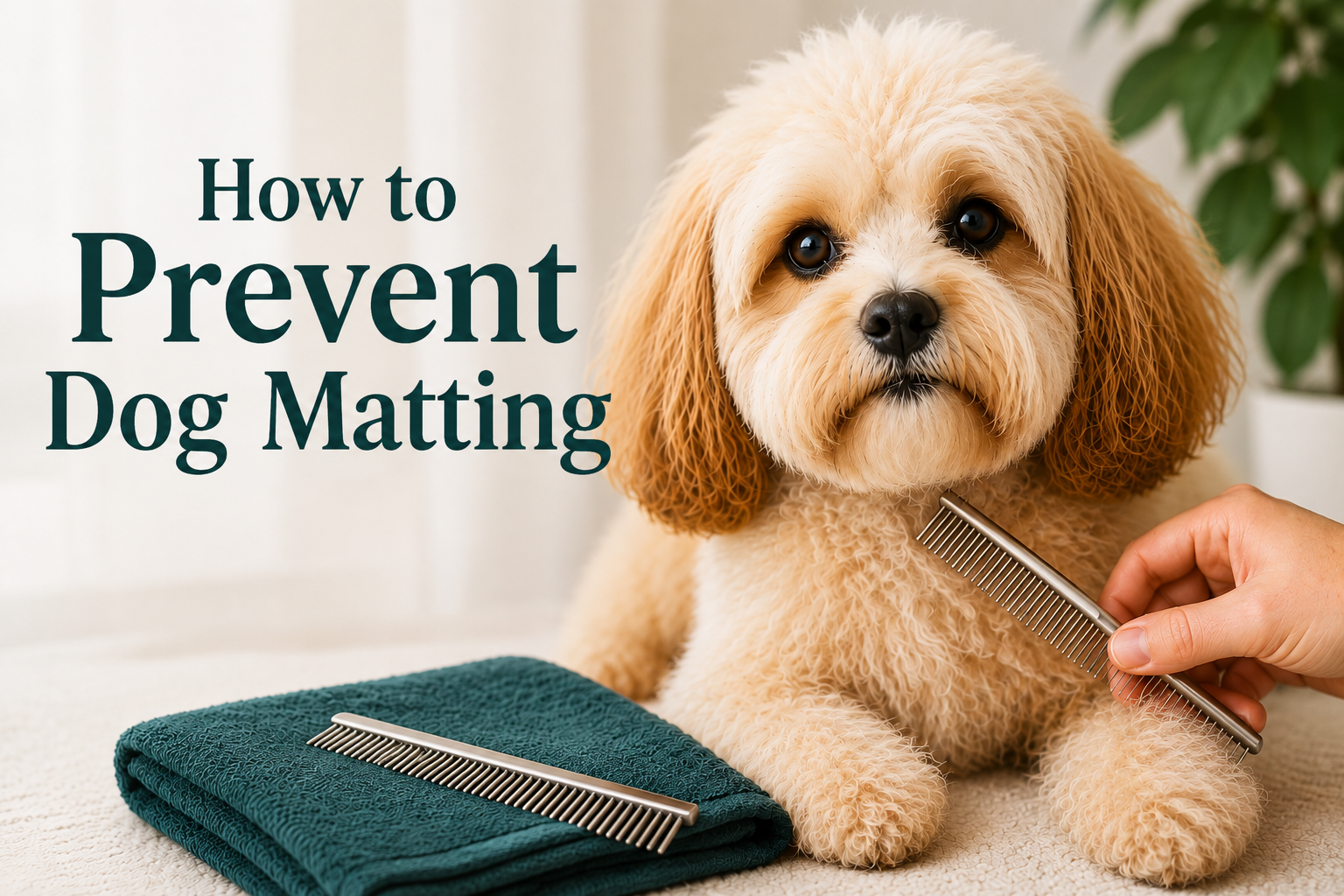
A metal grooming comb is one of the best tools for checking your work.
After brushing, gently pass the comb through the coat from the skin outward. Do not force it through resistance.
When the comb catches, stop and inspect the area.
A small tangle found early is easier to handle than a dense mat discovered weeks later.
Focus on High-Risk Areas
Some parts of the coat mat faster because of movement, pressure, moisture, and friction.
Check these areas frequently:
- Behind the ears
- Beneath the collar
- Under the harness
- Armpits
- Chest
- Belly
- Inner legs
- Groin
- Sanitary area
- Tail and tail base
- Feet and toes
- Beard and mouth area
- Areas covered by sweaters or coats
The hair behind the ears can mat quickly because it is fine, soft, and constantly moving.
Harnesses and clothing can create mats even when the rest of the coat looks well maintained.
Brush Before and After Wearing a Harness or Clothing
Collars, harnesses, sweaters, coats, and recovery garments create repeated friction.
Before putting them on, make sure the coat beneath them is dry and free of tangles.
After removing them, check the areas where straps, seams, and fabric rubbed against the coat.
For dogs with long hair, leaving a harness on for extended periods can speed up mat formation.
Never Leave the Coat Damp
Moisture can tighten tangles.
After bathing, swimming, walking in rain, or playing in snow, dry the coat thoroughly.
Pay close attention to:
- Armpits
- Belly
- Feet
- Behind the ears
- Beneath the collar area
- Tail
- Inner legs
Do not rub a long coat aggressively with a towel. Hard rubbing can twist the hair and create new tangles.
Instead, blot or squeeze the coat gently, then dry and brush it carefully.
Brush Before Bathing
Bathing a tangled coat can make the problem worse.
Water and shampoo may tighten existing knots, especially when the coat dries without being fully separated.
Before bathing:
- Check the coat with your fingers
- Brush out loose tangles
- Use a comb to find hidden resistance
- Address problem areas before the coat becomes wet
Do not bathe a severely matted dog at home without professional guidance.
Use the Right Grooming Tools
The correct tools depend on coat type and condition.
Common tools include:
- Slicker brush
- Pin brush
- Metal comb
- Undercoat rake
- Deshedding tool
- Detangling spray
- Grooming dryer
- Mat splitter for limited, experienced use
- Clippers for trained or professional use
A tool that works well on one coat may be ineffective or damaging on another.
For example, an aggressive deshedding tool may be inappropriate for a delicate silky coat, while a soft brush may not reach a dense undercoat.
Review the Dog Grooming Tools guide before choosing equipment.
Use Detangling Products Carefully
A dog-safe detangling spray or conditioner may help reduce friction and make brushing easier.
The product should be:
- Intended for dogs
- Appropriate for the coat
- Used according to the label
- Avoided around the eyes and mouth unless specifically permitted
- Discontinued if irritation develops
A spray cannot solve tight matting by itself.
It may help with small tangles, but it does not make painful dematting safe.
Keep Grooming Sessions Short and Calm
Waiting until the coat needs a long session can make grooming difficult for both the dog and owner.
Short, regular sessions are often better.
A practical routine may include:
- A quick daily check of high-risk areas
- Several short brushing sessions each week
- A full coat check once or twice a week
- Professional grooming on a consistent schedule
The exact frequency depends on the coat.
Reward calm behavior. Use a stable, non-slip surface. Stop before the dog becomes overwhelmed.
A dog that struggles with grooming may need gradual handling practice rather than stronger restraint.
Teach the Dog to Accept Handling
Mat prevention becomes easier when the dog is comfortable being touched.
Practice gently handling:
- Ears
- Paws
- Legs
- Tail
- Belly
- Armpits
- Face
- Collar area
Keep sessions brief and positive.
Pair gentle handling with treats, praise, or another reward the dog enjoys.
Do not force long sessions when the dog is frightened.
Maintain a Realistic Coat Length
Long coats can be beautiful, but they require time and consistency.
A shorter trim may be the better choice when:
- Brushing is frequently missed
- The dog strongly resists grooming
- The coat mats quickly
- The dog swims often
- The dog wears a harness or clothing
- The owner cannot maintain a long coat
- The dog has mobility or health limitations
- Professional appointments are spaced far apart
Choosing a manageable haircut is responsible coat care.
It is better to maintain a shorter comfortable coat than repeatedly allow a longer coat to become painful and matted.
Schedule Professional Grooming Before Problems Start
Professional grooming should be preventive, not only corrective.
Ask the groomer how often the dog should return based on:
- Breed
- Coat type
- Coat length
- Haircut style
- Activity level
- Home brushing
- Bathing schedule
- Matting history
- Grooming tolerance
Some dogs may need appointments every four to six weeks. Others may need different intervals.
The best schedule is the one that keeps the coat manageable between visits.
Use the Shih Tzu Groomer Finder to search nearby grooming businesses, and use the Dog Groomer Interview Assistant to prepare questions before booking.
Check the Coat After Outdoor Activity
Leaves, grass seeds, burrs, dirt, and small twigs can become trapped in long or dense coats.
After walks, hiking, yard play, or time in wooded areas:
- Check the feet
- Inspect the legs
- Look beneath the belly
- Check the tail
- Examine behind the ears
- Remove debris before it twists into the coat
Do not pull sharply on burrs or foreign objects. Separate the surrounding hair carefully or seek professional help when needed.
Pay Attention During Seasonal Shedding
Double-coated and mixed-coat dogs may require extra grooming when they are shedding heavily.
Loose undercoat can pack together close to the skin.
During shedding periods:
- Increase brushing frequency
- Work in sections
- Use an appropriate undercoat tool
- Avoid scraping the same area repeatedly
- Watch for skin irritation
- Consider a professional deshedding service
Do not assume shaving is the best answer for every double-coated dog. A knowledgeable groomer can explain the risks and alternatives.
Keep Collars and Harnesses Clean
Dirty or damp equipment increases friction and may trap moisture.
Wash collars, harnesses, clothing, and bedding as recommended.
Make sure equipment is dry before placing it back on the dog.
Check the coat beneath frequently used gear.
Watch for Medical Reasons Grooming Has Become Harder
Sometimes matting increases because the dog can no longer tolerate normal care.
Possible reasons include:
- Arthritis
- Pain
- Skin disease
- Obesity
- Weakness
- Fear
- Cognitive changes
- Recovery from surgery
- Ear problems
- Sensitivity around a specific area
A sudden change in grooming tolerance should not automatically be treated as bad behavior.
Talk with a veterinarian when pain or illness may be involved.
Create a Simple Mat-Prevention Schedule
A routine is easier to maintain when it is specific.
Daily
- Check behind the ears
- Check armpits
- Check collar and harness areas
- Remove visible debris
- Look for moisture
Two or three times per week
- Brush high-risk areas
- Check with a comb
- Inspect feet and tail
- Work through small developing tangles
Weekly
- Complete a full coat check
- Examine the skin
- Clean grooming tools
- Review areas hidden by clothing or gear
After every bath or swim
- Dry thoroughly
- Separate the coat
- Brush and comb
- Check for tightened tangles
Every professional appointment
- Ask about new problem areas
- Confirm the next appointment
- Discuss the best home routine
- Ask whether the current coat length is realistic
Signs Your Prevention Routine Needs to Change
The current routine may not be enough when:
- Mats appear between grooming sessions
- The comb cannot reach the skin
- The dog is increasingly resistant
- Brushing sessions take too long
- The coat remains damp for hours
- Harness areas constantly tangle
- The groomer repeatedly recommends shaving
- Small tangles quickly become large mats
The solution may be more frequent brushing, better technique, different tools, a shorter haircut, or more frequent professional grooming.
What to Do When You Find a Small Tangle
When the tangle is loose and not tight against the skin:
- Hold the coat near the skin to reduce pulling.
- Use your fingers to separate the outer hairs.
- Apply a dog-safe detangling product if appropriate.
- Work gently from the ends inward.
- Use a brush in short strokes.
- Check the area with a comb.
- Stop if the dog appears painful.
Do not keep pulling simply because the tangle looks small.
When the skin is pulled into the knot or the tangle feels dense, contact a groomer.
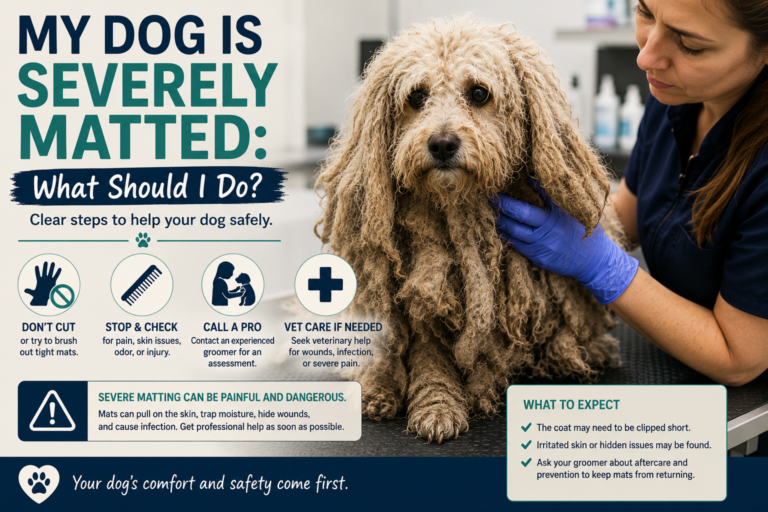
When Prevention Has Already Failed
Sometimes the coat is already too matted for routine home care.
Signs professional help may be needed include:
- Mats are tight against the skin
- Large areas are connected
- The dog cries, growls, or snaps
- The skin cannot be seen
- There is odor, moisture, redness, or discharge
- Mats wrap around a leg, tail, toe, or ear
- The dog is medically fragile
- You cannot safely control the grooming tool
Read What to Do When Your Dog Is Severely Matted before attempting difficult coat removal.
Final Thoughts
Preventing dog matting comes down to consistency.
Use tools suited to the coat. Brush in sections. Check with a comb. Keep the coat dry. Pay attention to friction areas. Maintain a coat length you can realistically manage. Schedule professional grooming before the coat becomes difficult.
The goal is not a perfect show coat.
The goal is a coat that stays clean, comfortable, and free from painful tangles.
A few minutes of regular care can prevent hours of stressful dematting later.
Related Dematly Resources
- What to Do When Your Dog Is Severely Matted
- Dog Matting Help
- Dog Coat Types
- Dog Grooming Routines
- Dog Grooming Tools
- Dog Skin and Coat Care
- Professional Dog Grooming
- Dog Groomer Interview Assistant
Dematly provides general educational information and does not replace guidance from a veterinarian or qualified professional groomer.